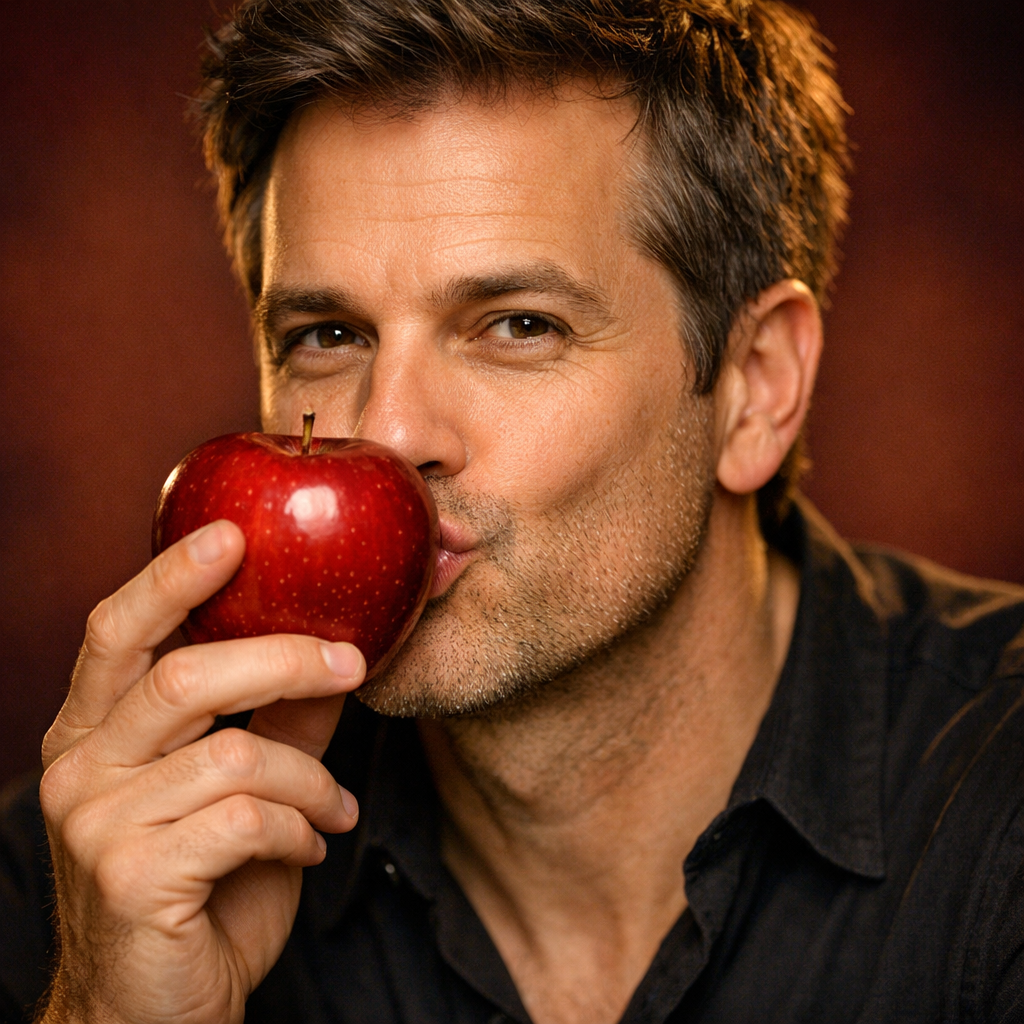
I almost didn't kiss her.
We were standing outside a coffee shop in the rain, one of those moments that felt like it belonged in a movie. The conversation had gone perfectly. The eye contact lingered a beat too long. Everything was right.
And I was frozen.
My brain was running calculations I couldn't keep up with. Is this the moment? Does she want this? What if I read it wrong? The internal monologue was so loud I almost missed the fact that she was leaning in slightly. Waiting.
I went for it. And it was one of the best first kisses of my life.
Here's what I've learned in the years since: the nerves never fully go away. You just get better at moving through them. And the people who seem naturally confident? They're nervous too. They've just learned that nervousness isn't a stop sign. It's a green light.
Let me show you what I mean.
Everyone Is Nervous (Yes, Even Them)
Here's what nobody tells you about first kisses: the other person is just as terrified as you are.
Think about it. They're wondering if you want to kiss them. They're worried about their breath. They're calculating the angle of approach and panicking about which way to tilt their head. They're experiencing the exact same cascade of adrenaline and anticipation that's flooding your system right now.
This is actually a good sign.
Nervousness means you care. It means this matters. The kisses that feel electric? They start with two people who are both a little scared of wanting something this much.
The problem isn't the nerves. The problem is when nerves become paralysis. When you wait so long for the "perfect moment" that the moment passes entirely. When you talk yourself out of something that both of you wanted.
So let's fix that.
Reading the Room (The Signals That Matter)
You don't need to be a mind reader. You just need to know what to look for.
The Three Green Lights
1. Physical proximity keeps shrinking.
If someone is interested in kissing you, they'll find reasons to get closer. They'll lean in when you're talking. Their hand might find your arm. The space between you will slowly, almost imperceptibly, disappear. Watch for this. When someone wants to be kissed, they make themselves easier to reach.
2. Eye contact gets weird in the best way.
There's a specific kind of eye contact that signals romantic interest. It lingers too long. It drops to your lips. It creates a charge that makes normal conversation suddenly feel intense. If you catch them looking at your mouth and then quickly looking away, that's not an accident. That's an invitation.
3. The conversation creates pockets of silence.
This sounds counterintuitive, but the best first kiss signals often come in the pauses. When the conversation trails off and neither of you moves to fill the silence. When you're just looking at each other, aware that something is about to shift. That silence is the moment asking you to step into it.
When to Wait
Not every connection leads to a first kiss, and that's okay. If someone keeps their physical distance, avoids prolonged eye contact, or keeps the conversation strictly friendly, trust those signals. Respecting boundaries is attractive. Forcing a moment that isn't there is the opposite.
The Approach (Make It Feel Inevitable)
The best first kisses don't happen suddenly. They build.
The Touch Escalation Ladder
Physical connection should progress naturally before a kiss. Start small: a touch on the arm during conversation, a hand on the small of their back as you walk, fingers brushing against theirs. Each touch that lands well gives you permission for the next.
By the time you lean in for the kiss, it should feel like the logical next step in a conversation your bodies have already been having.
The Power of the Pause
When the moment is right, don't rush.
Move closer. Slower than you think you should. Let the anticipation build. There's a scene in Hitch where Will Smith talks about going ninety percent of the way and letting the other person come the remaining ten. That's the pause. That's giving them space to meet you.
The pause does something magical: it takes the pressure off both of you. You're not ambushing anyone. You're creating an invitation that they can accept.
Eye Contact That Speaks
Right before a kiss, look at them. Not at your shoes. Not over their shoulder. At them. Let them see that you want this. Confidence isn't about having no fear. It's about letting another person see your desire anyway.
The Magic Words (When in Doubt, Ask)
Here's a secret that will save you years of overthinking: you can just ask.
"I really want to kiss you right now."
"Can I kiss you?"
"I've been thinking about kissing you all night."
Some people think asking kills the spontaneity. Those people are wrong. Asking, done right, doesn't break the tension. It heightens it. You're naming what's already in the air. You're giving them the opportunity to say yes out loud, which often feels as intimate as the kiss itself.
The key is delivery. Say it like you mean it. Not as a question seeking permission, but as a statement of desire that includes an invitation. The difference is confidence. "Can I maybe kiss you possibly?" is weak. "I want to kiss you right now" is magnetic.
When It Finally Happens
You've read the signals. You've closed the distance. The moment is here.
Now what?
Start Softer Than You Think
The number one mistake in first kisses is coming in too hot. Don't mash your face into theirs. Don't immediately go for the deep, passionate kiss you've been imagining.
Start soft. Gentle pressure. Lips barely touching. Let the kiss begin as something tender before it becomes something more.
This does two things: it creates room for the kiss to build in intensity, and it allows both of you to calibrate to each other's rhythm. A kiss is a conversation. And like any conversation, you need to listen before you speak.
The Mirror Technique
I wrote an entire article on this (you should read it), but the short version is: match your partner. Pay attention to their pressure, their pace, their movements. Reflect them back. When two people synchronize like this, something clicks. The kiss stops feeling like two separate people and starts feeling like one shared moment.
End Strong
Pull away slowly. Not abruptly. Let the kiss fade rather than snap off. Hold eye contact for a beat after. Smile.
The end of a first kiss is almost as important as the beginning. It's the moment where you both acknowledge what just happened. Where the shared smile says yes, that was exactly as good as I hoped.
What If It's Awkward?
Let me tell you something liberating: most first kisses are at least a little awkward. Noses bump. Timing gets weird. Someone goes left when the other goes right.
This is not a disaster. This is human.
The move here is simple: laugh. A shared laugh after a slightly clumsy first kiss does more for connection than a technically perfect kiss ever could. It says, "We're in this together. We're figuring this out. And I like you enough to be imperfect with you." If braces are part of your worry, we have a whole guide on how to kiss with braces that will put your mind at ease.
Besides, the second kiss is always better. You've broken the seal. The tension has transformed into something more playful. Now you get to actually explore each other without the weight of "will this happen" hanging over you.
The Real Secret
A first kiss isn't really about technique. It's about presence.
It's about being fully in the moment with another person. Not rehearsing your moves in your head. Not worrying about what comes next. Just being there, aware of them, aware of yourself, aware of the electricity that exists in the space between two people who want the same thing.
The nerves will come. Let them. Move through them. Read the signals. Create the moment. And when you finally lean in, remember: they've been waiting for this too.
That's the goal. And it's more achievable than you think.