There's a moment, on a date or in a conversation that's gone electric, where you stop wondering if you want to kiss this person and start obsessing over how to make it happen.
Not the mechanics. Not the lean-in. The part before that: how to make them want it as badly as you do.
Most advice on this topic is embarrassingly shallow. Touch your lips. Make eye contact. Wear lip gloss. As if desire is a vending machine and you just need the right combination of coins.
The truth is more interesting. And more useful.
Making someone want to kiss you isn't about performing a checklist. It's about understanding the specific psychological triggers that shift a person's brain from "this is nice" to "I need to close this gap right now." And then activating those triggers so naturally that they never feel like strategy.
Why "Making" Someone Want to Kiss You Is the Wrong Frame
Let me reframe this before we go further.
You can't manufacture desire from nothing. If someone isn't attracted to you, no amount of lip-licking or strategic leaning will change that. What you can do is take existing attraction (the kind already simmering under a good conversation, a lingering look, a laugh that goes on a beat too long) and concentrate it until the kiss becomes inevitable.
That's what this guide is actually about. Not creating attraction from scratch. Concentrating it.
The science of kissing backs this up. Research on kissing anticipation shows that the brain's reward system activates most strongly not during the kiss itself, but in the moments just before. The wanting is where the electricity lives. Your job is to extend that wanting just long enough to make the kiss feel like a relief instead of a risk.
The Proximity Principle
The single most powerful thing you can do to make someone want to kiss you has nothing to do with your lips.
It's distance. Specifically: the systematic, gradual reduction of it.
Human brains are wired to interpret decreasing physical distance as increasing intimacy. When someone moves closer to you and you don't pull away, your nervous system reads that as trust. Safety. Permission. Each inch of space that disappears is a tiny renegotiation of boundaries, and when it happens gradually, the tension becomes almost unbearable in the best possible way.
Here's how it works in practice:
Start at conversation distance. Arm's length, facing each other normally. Baseline. Nothing to interpret here.
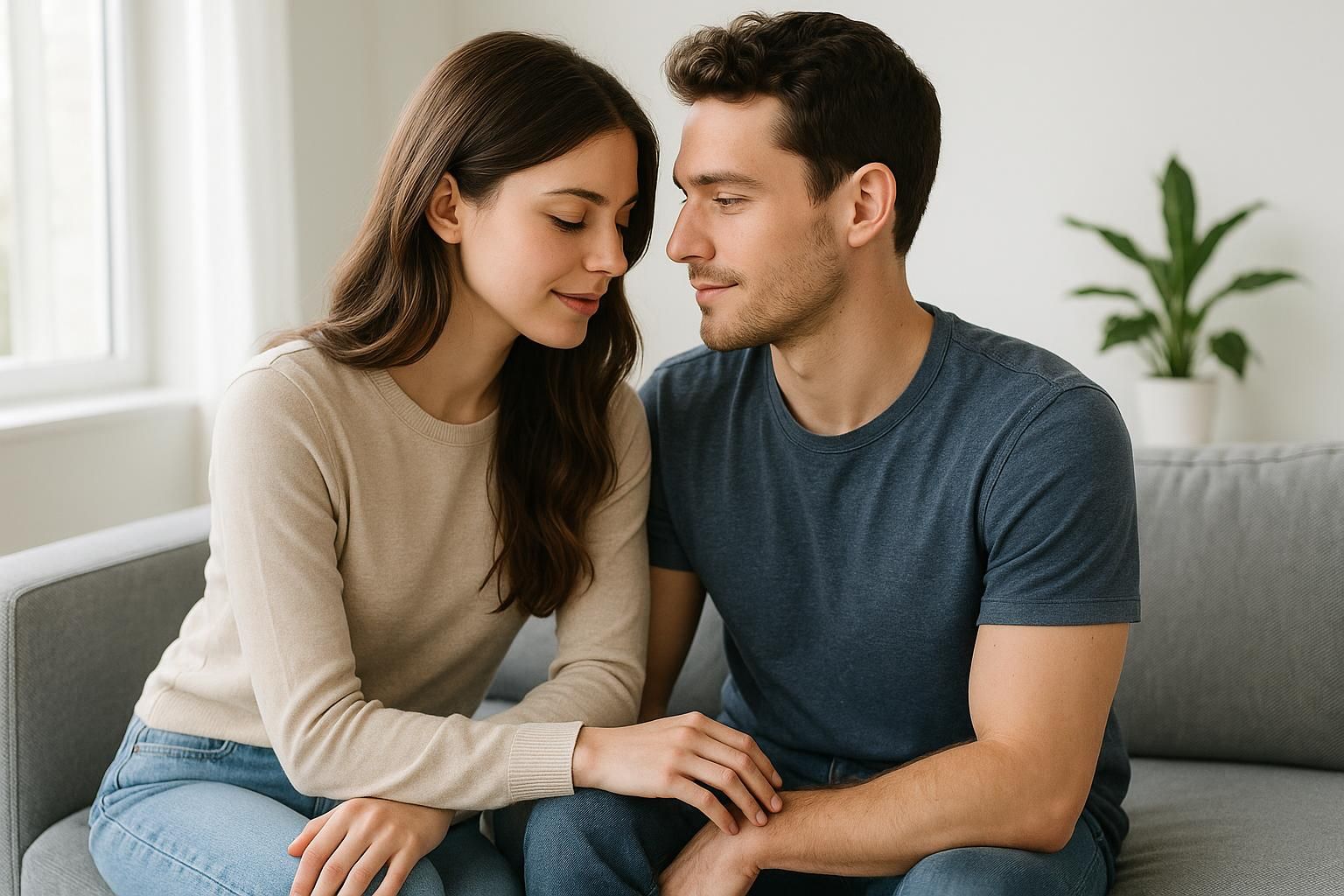
Move to confidential distance. Lean in when you say something. Close enough that you could lower your voice and they'd still hear every word. Close enough that they can smell you. This shift should feel natural: you're telling them something, you're showing them something on your phone, you're pointing at something nearby. The reason doesn't matter. The proximity does.
Arrive at kiss distance. This is the range where your faces are close enough that a kiss would require movement measured in inches, not feet. The gap between confidential distance and kiss distance is where most people freeze. Don't rush it. Let the closeness sit for a moment. Let them feel it. If they stay, if they mirror your position, if their eyes drop to your mouth even once: the desire is building exactly the way you want it to.
The beautiful thing about proximity: it works whether you plan to initiate the kiss or want them to. Proximity creates pressure. Pressure creates action. Often, the person who closes the final inch isn't the one who started the approach. It's the one who couldn't stand the tension any longer.
The Triangle (And Why It Actually Works)
You've probably heard of the "triangle gaze." Look at their left eye, then their right eye, then their mouth, then back up. It's become almost cliche dating advice.
Here's why it still works, even when both people know the trick.
When you look at someone's lips during conversation, you're sending a signal that bypasses conscious interpretation and lands directly in the brain's pattern-recognition system. The person doesn't need to consciously notice you looking at their mouth. Their subconscious registers it, files it under "this person is thinking about kissing me," and starts running the anticipation circuit.
A study from the University of Kansas found that people could identify romantic intent from eye-tracking patterns alone with roughly 80% accuracy. Your gaze literally broadcasts your intentions.
The key is subtlety. A quick, unconscious-looking flick to their lips and back. Not a slow, obvious stare-down of their mouth like you're reading their dental records. The goal is to plant a seed, not beat them over the head with it.
Do it once. Maybe twice. Then stop. Let the seed do its work.
For the complete breakdown of how to read their gaze back at you, the guide on signs someone wants to kiss you covers all twelve signals.
Touch That Creates a Countdown
Touch is the accelerant.
Not aggressive touch. Not groping or pulling or any of the heavy-handed nonsense that terrible dating advice recommends. The kind of touch that works is light, brief, and gradually escalating.
Think of it as a countdown that neither of you consciously acknowledges but both of you feel.
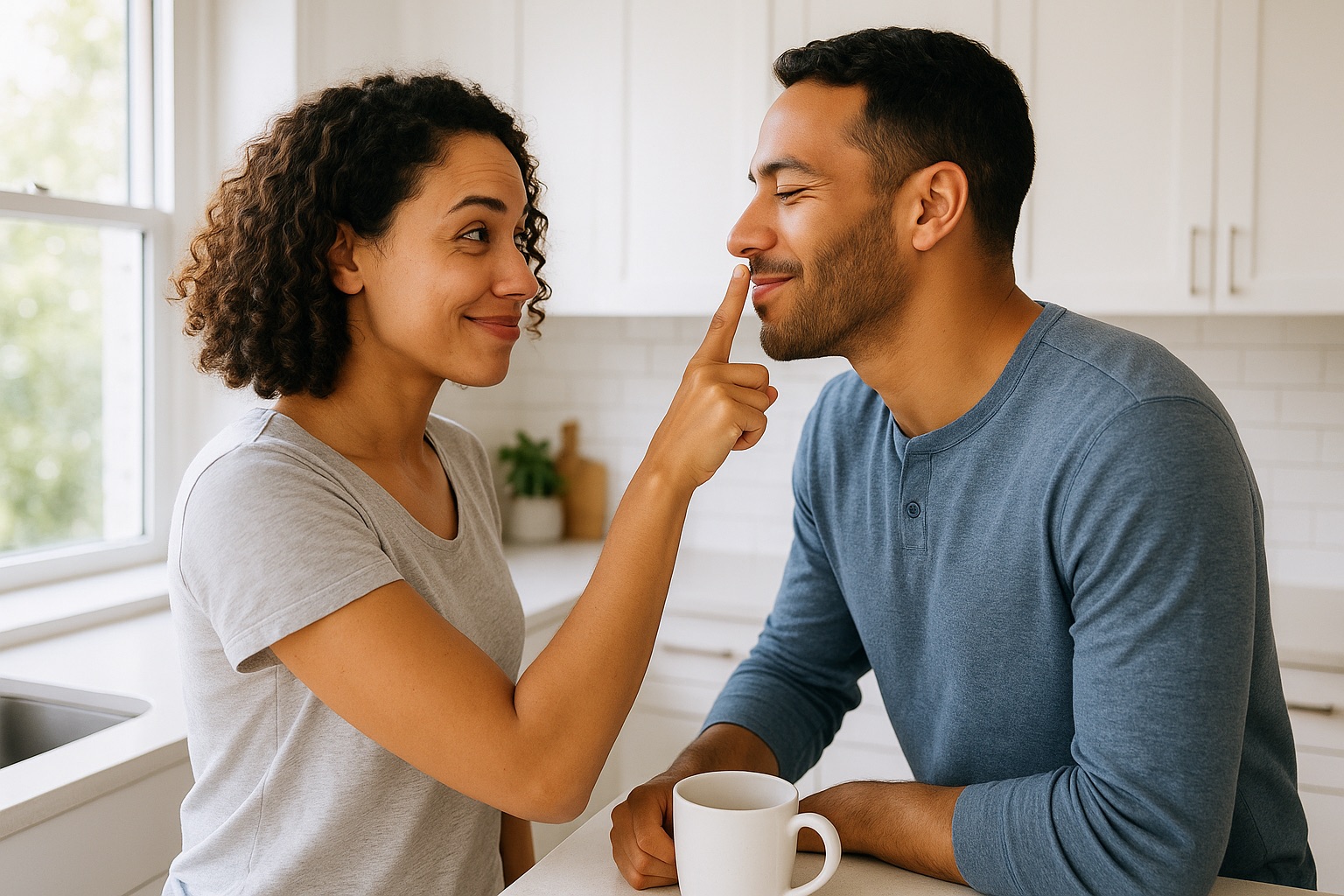
The casual touch. A hand on their arm to emphasize a point. Brushing something off their shoulder. Passing something hand-to-hand with your fingers lingering a half-second longer than necessary. These touches establish that physical contact between you is normal. Safe. Welcome.
The intentional touch. Tucking a piece of hair behind their ear. Touching the small of their back as you walk through a doorway. Putting your hand on their knee during a conversation. These say: I'm not just being friendly. I'm interested.
The charged touch. Straightening their collar while looking at their mouth. Tracing a finger lightly along the back of their hand. Brushing your thumb across their cheekbone. These are the touches that make someone's breath catch. And when someone's breath catches, their brain starts screaming one word.
Each level builds on the last. Skip to the charged touch without the casual and intentional warmup, and it feels invasive. Build through all three, and that final touch before the kiss feels like the most natural thing in the world.
The Power of the Almost
This is the move that separates people who get kissed from people who get cheek-turned.
The almost-kiss.
You lean in. Close enough that your breath touches their skin. Close enough that the kiss seems absolutely certain. And then... you don't. You pause. You smile. You say something quiet. You pull back an inch.
This does something extraordinary to the brain's reward system.
Neuroscience calls it "reward prediction error." When the brain expects a reward (the kiss) and doesn't receive it, dopamine doesn't just maintain: it spikes. The anticipation intensifies. The want becomes nearly physical. Every subsequent moment of closeness carries twice the voltage because now they're waiting for the resolution of a promise your body language already made.
The art of teasing with a kiss is an entire skill set, but the core principle is simple: the kiss you almost give is often more powerful than the one you do.
One word of warning: this works exactly once per encounter. Do it twice and you're playing games. Do it three times and they'll assume you don't actually want to kiss them. The almost is a match. Strike it once and let it burn.
What You Say Matters Less Than How Close You Are When You Say It
People overthink the verbal component. They search for the perfect line, the clever thing to say that will make the other person melt.
Here's the truth: it's not what you say. It's the volume at which you say it.
When you lower your voice and lean in to say something (anything, genuinely anything), you're creating an intimate pocket of space that belongs only to the two of you. The words become secondary to the experience of hearing them: breath against skin, a voice meant only for them, the warmth of another person close enough to feel.
Try this: during a conversation that's going well, lean in close enough that your words are almost a whisper and say something genuine. "I'm really glad we did this." "You have this way of making me lose track of time." Even "I keep getting distracted by your smile" works, provided you mean it.
The content matters less than the delivery. The whisper, the proximity, the warmth of your breath near their ear or their cheek: that's what activates the cascade. That's what makes them think about your mouth. And once someone is thinking about your mouth, the kiss is practically already happening in their imagination.
The Lip Factor (Yes, It's Real)
Your lips are broadcasting whether you know it or not.
Dry, cracked, peeling lips say: I didn't think about kissing today. Well-moisturized, healthy lips say: I take care of the things that matter.
This isn't vanity. It's biology. The vermilion border of your lips contains more nerve endings per square centimeter than almost any other part of your body. When someone looks at your mouth (and they will), their brain is unconsciously assessing whether those lips look like they'd feel good. Whether they look like an invitation.
Keep them hydrated. Not glossy, not waxy, not slathered in product. Just healthy. A good lip balm applied twenty minutes before you meet someone gives the best results: moisturized but not visibly coated.
And the thing nobody talks about: unconscious lip-touching. When you briefly touch your own lower lip during conversation (not as a performance, but as a natural gesture), it draws attention to your mouth in a way that plants the seed of a kiss without either of you realizing it happened. It's one of the most commonly reported "things attractive people do without knowing it" in attraction research.
The One Thing That Ruins Everything
Desperation.
You can do everything on this list perfectly and undo all of it with one moment of obvious try-hard energy. The lean-in that comes too fast. The touch that happens before trust is established. The gaze at their lips that lasts a beat too long and crosses from interested to hungry.
The paradox of making someone want to kiss you is that it works best when you genuinely don't need it to happen. When you're enjoying the conversation, the closeness, the tension for its own sake (not as a means to an end), the other person can feel that ease. And ease is the most attractive thing in the world.
The best kissers I know share one quality: they don't chase the kiss. They create the conditions for it and then let it arrive. They're having such a good time in the almost that the actual kiss, when it comes, is just the natural next sentence in a conversation that was already flowing.
If you're so focused on getting the kiss that you forget to enjoy the person, they'll feel it. And the spell breaks.
Frequently Asked Questions
How can I tell if someone wants me to kiss them?
The clearest signals are decreasing distance (they keep finding reasons to be closer), mirroring (they match your body position and energy), and the lip-triangle gaze (their eyes drop to your mouth and back). If you're seeing two or more of these, the desire is almost certainly mutual. For the full breakdown, the signs someone wants to kiss you guide covers all twelve indicators.
Does building tension work for getting someone to make the first move?
Yes. Everything here creates mutual tension. The proximity principle and the almost-kiss technique are especially effective because they build pressure that someone has to release. Often, that someone is the other person. You don't need to be the one who initiates; you just need to make the kiss feel inevitable.
What if I do all of this and they still don't kiss me?
Then they may not be ready, or the attraction may not be mutual. That's okay. None of this is a guarantee because desire can't be manufactured from nothing. If the foundation of attraction isn't there, these techniques create a pleasant evening, not a forced kiss. And a pleasant evening is never wasted.
How long should I build tension before going for the kiss?
There's no formula. Some connections reach kiss-readiness in twenty minutes. Others simmer for hours or across multiple dates. Pay attention to the escalation: if the proximity keeps closing, the touches keep landing, and neither of you is pulling away, the timing will feel obvious. Trust the signals, not a clock. If you're wondering about the right moment on a date specifically, the guide on when to kiss on a date breaks down the timing in detail.
What if I'm not naturally flirty or confident?
Good news: none of this requires natural flirtiness. The proximity principle is just sitting closer. The triangle gaze is just looking. Touch escalation starts with touching their arm while making a point, something everyone does naturally. Confidence isn't a prerequisite; it's a byproduct. When you do these things and see them working, the confidence arrives on its own. The practice guide has exercises that build physical comfort, but honestly, everything here is already practice in disguise.
The best kiss you've ever had probably wasn't planned. Someone just created the conditions where it couldn't not happen.