You're 23 and you've never kissed anyone. Or 28. Or 17 and already convinced you're running out of time.
Every rom-com, every "you just know" story from friends, every casual mention of someone's first kiss at summer camp when they were fourteen: it all lands like evidence. That you missed a window. That the longer you wait, the more noticeable the gap becomes. That everyone else received some instruction manual you never got.
Let me be direct.
There is nothing wrong with you. And your first kiss is going to be fine. Not perfect. Not cinematic. Fine. And "fine" is significantly better than you think right now.
You're Not Behind. The Timeline Is a Lie.
The average age for a first kiss in the United States hovers around 15. Which means half of people are older than that. And "average" is a terrible compass for something as personal as physical intimacy.
Here's what the statistics don't capture: the person who had their first kiss at 13 during a dare at a birthday party didn't exactly have a transformative romantic experience. They had a thing happen to their face while someone counted to three. The person who waited until they actually wanted to kiss someone and felt safe enough to do it? They just had different priorities. Neither version is more valid than the other.
The reason you feel behind is that nobody talks about waiting. People discuss their first kiss the way they discuss other milestones: with an unspoken assumption that everyone does it early, and anyone who doesn't is either too scared or too broken to participate.
That assumption is garbage.
A survey of 18-to-24-year-olds found that roughly 14% hadn't had their first kiss yet. That's not a rounding error. That's millions of people scrolling past the same TikTok videos you're scrolling past, feeling the exact same thing you're feeling right now.
You're not alone. You're just quiet about it. Because everyone else in the same situation is also quiet about it.
Why It Hasn't Happened Yet (The Three Honest Reasons)
There are really only three reasons someone hasn't been kissed, and none of them are "you're defective."
1. Opportunity didn't show up.
Not everyone grows up in environments where dating is easy or even possible. Maybe you were focused on school, dealing with family stuff, living somewhere with a limited social scene, or navigating your own mental health. Maybe you were just busy being a human with priorities that didn't revolve around kissing.
That's not a character flaw. That's a life.
2. Anxiety got in the way.
The fear of doing it wrong, of being rejected, of someone finding out this would be your first kiss: it's powerful enough to make you dodge opportunities that are right in front of you. You might have had moments where it could have happened. But the risk felt too high, so you let them pass.
This is the most common reason, and it's the one nobody wants to admit. Because admitting it means admitting you were scared. And we've somehow decided that being scared of something vulnerable makes you weak instead of, you know, human.
3. You chose to wait.
For some people, kissing isn't casual. It's connected to something deeper: trust, emotional readiness, values, or a sense that the first person you kiss should matter. This isn't naivety. It's a standard. And holding a standard isn't the same thing as hiding behind one (though it's worth being honest with yourself about which one you're doing).
Here's the truth that covers all three: the reason it hasn't happened yet matters far less than what you do with the present. You're here now. The past is just a story you've been telling yourself about yourself, and stories can be rewritten any time you choose.
What Hollywood Got Wrong About First Kisses
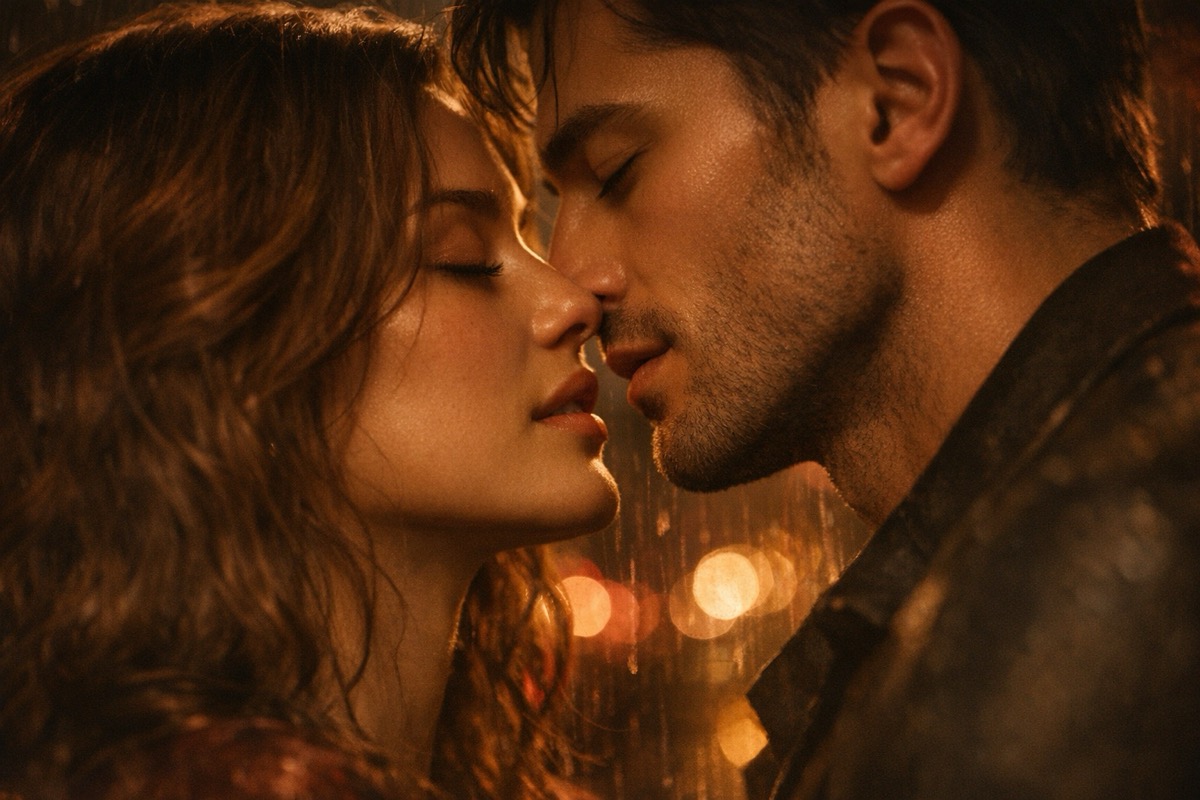
Every movie tells you the same thing. Rain falls. Music swells. Two beautiful people look at each other for exactly the right amount of time, tilt at exactly the right angle, and their lips meet in a moment of transcendent perfection.
Nobody bumps noses. Nobody wonders where to put their hands. Nobody pulls away and says "was that okay?"
Here's what actually happens in most first kisses: it's a little clumsy. It's a little fast or a little slow. Someone laughs nervously. Someone's lips are drier than expected. The angle is slightly wrong. It lasts either too long or not long enough. And despite all of that, it still feels like something.
That "something" isn't the perfection of the kiss itself. It's the fact that you did it. The relief, the rush, the sudden realness of another person's mouth on yours. The physical sensation is secondary to the emotional earthquake of crossing a line you've been staring at for years.
So let go of the movie version. It was never real for anyone. Not for the people who kissed at 14 and not for you. The real version is messier, more honest, and most people prefer it once they experience it.
The Preparation Trap (And Why It's Keeping You Stuck)
If you've been reading articles about kissing technique, watching tutorials, or quietly practicing on the back of your hand: I see you. And I need to gently tell you something.
You can't prepare your way into a first kiss.
Preparation feels productive because it gives your anxiety a job. "I'm not avoiding kissing; I'm getting ready for it." But readiness isn't the bottleneck. Opportunity and courage are. You could memorize every technique in every guide on this site and still freeze the moment someone leans in, because the thing that actually matters isn't the mechanics. It's the willingness to be imperfect.
That said, there's a difference between over-preparation and basic confidence. If knowing the fundamentals helps you feel less terrified, the first-time kissing guide covers exactly what to expect. And the practice guide has honest advice about what actually builds comfort and what's a waste of time.
But don't let preparation become a substitute for participation. At some point you have to close the browser tab and go live your life.
How to Actually Make It Happen
I'm not going to tell you to "just put yourself out there." That's advice for people who already know how. Let me be more specific.
Stop treating the kiss as the goal.
The kiss isn't the point. The connection is the point. When you fixate on "I need to kiss someone," you turn every interaction into a pass/fail exam. When you focus on "I want to connect with someone," the kiss becomes a natural extension of something that's already building.
Get closer to people. Not physically (not yet). Emotionally. Have conversations that go past surface level. Make eye contact that lasts a beat longer than comfortable. Let silences happen without rushing to fill them. Closeness builds a bridge. The kiss is just walking across it.
Learn to read the signals.
There's a moment before a first kiss where both people know it's approaching. The conversation gets quieter. The space between you shrinks. They glance at your mouth. They stay when leaving would be easy. Their body turns toward yours instead of angling away.
Learn those signals. The body language guide covers twelve of them backed by research. Once you can recognize the invitation, acting on it becomes dramatically less terrifying. You're not guessing anymore. You're reading.
Give yourself permission to ask.
"I really want to kiss you right now" is not a mood killer. For most people, it's the opposite. It's honest, it's clear, and it eliminates the guessing game that makes first kisses so nerve-wracking. If the idea of saying it out loud feels vulnerable, good. Vulnerability is the entry fee for intimacy, and it's also one of the most attractive things a person can display.
The asking-for-a-kiss guide covers five ways to do this that build tension instead of killing it. Verbal consent isn't a buzzkill. It's a power move.
Accept that the first one doesn't need to be the best one.
Your first meal at a restaurant isn't your last. Your first time driving a car isn't your best lap. Your first kiss is an opening act, not a final performance. Give yourself the same grace you'd give anyone learning anything for the first time. The bar is lower than you think, and clearing it is easier than you fear.
What It Actually Feels Like (No, Not Like the Movies)
Since nobody seems to describe this honestly, let me try.
The seconds before are worse than the kiss itself. Your heart rate spikes. Your brain tries to talk you out of it with a highlight reel of everything that could go wrong. Every instinct screams "this is new and therefore dangerous." And then you lean in anyway.
The first thing you notice is warmth. Someone else's skin is suddenly touching your skin in a place that's absurdly sensitive. Your lips contain more nerve endings per square centimeter than almost anywhere else on your body. They register pressure, texture, temperature, moisture: all of it arrives at once, and your brain scrambles to process a type of input it's never received before.
It's a lot. It's also over faster than you expect.
You might not feel fireworks. That's normal. The fireworks thing is mostly adrenaline wearing off, and a first kiss is frequently too overwhelming for your brain to sort the feelings into neat categories in real time. Many people describe their first kiss as "a blur" and only realize it was actually great when they're lying awake replaying it at 2 AM.
You might also bump teeth. Or forget to breathe. Or not know when to stop. All of this is normal and none of it ruins anything. The person you're kissing either knows it's your first time and finds the whole thing endearing, or has their own clumsy first-kiss memory and understands completely.
The Awkwardness Is Inevitable. That's the Good Part.
Here's what everyone who has been kissed knows but nobody tells you.
Awkward first kisses are the norm. Not the exception. That person who kissed twenty people before you? Their first time was also weird. They've just had more time to forget about it and construct a cooler version of the story.
The awkwardness serves a purpose. It tells your brain: this is real. This isn't rehearsed. This person showed up and did something vulnerable, and so did you.
If the science of kissing teaches us anything, it's that the physical mechanics matter far less than the emotional context. A technically flawless kiss with someone you don't care about feels hollow. A technically messy kiss with someone who makes your pulse race? That's the one that rewires your brain chemistry and shows up in your dreams for weeks.
Don't aim for smooth. Aim for present. The smoothness comes later, with that person or the next one. The presence is what makes it count.
Frequently Asked Questions
Is it weird to have never been kissed in your 20s?
No. Roughly one in seven people between 18 and 24 haven't had their first kiss yet. The cultural pressure to hit milestones by certain ages has nothing to do with reality. Your timeline is your own, and "weird" is just a word people use when they can't imagine someone else's experience.
Should I tell someone it's my first kiss?
That depends entirely on what helps you be more present. If telling them would reduce your anxiety, tell them. Most people find it genuinely sweet, not strange. If the idea increases your anxiety, you don't have to share it. First kisses are clumsy for everyone, and they probably won't notice a difference. Do whatever lets you stay in the moment instead of inside your own head.
How do I get over the fear of a first kiss?
You don't get over it. You go through it. The fear doesn't vanish with preparation or positive self-talk. It dissolves approximately three seconds after your lips touch and your brain realizes: oh, this is just a kiss. Every person who has been kissed walked through that same door of fear. The only difference between you and them is that they've already forgotten how scared they were. The first-kiss nerves guide covers specific techniques for moving through the fear rather than waiting for it to leave on its own.
Will they be able to tell I've never kissed anyone?
Probably not, and even if they could, it matters far less than you think. Kissing is a responsive activity, not a performance. If you pay attention to what they're doing and follow their lead, that instinct alone makes you a better kisser than most. If you want a specific framework, read about matching your partner's kissing style. But the short version is: listen with your lips. They'll do most of the talking.
The best first kisses aren't the earliest ones. They're the ones where someone was brave enough to stop waiting for perfect and just showed up.