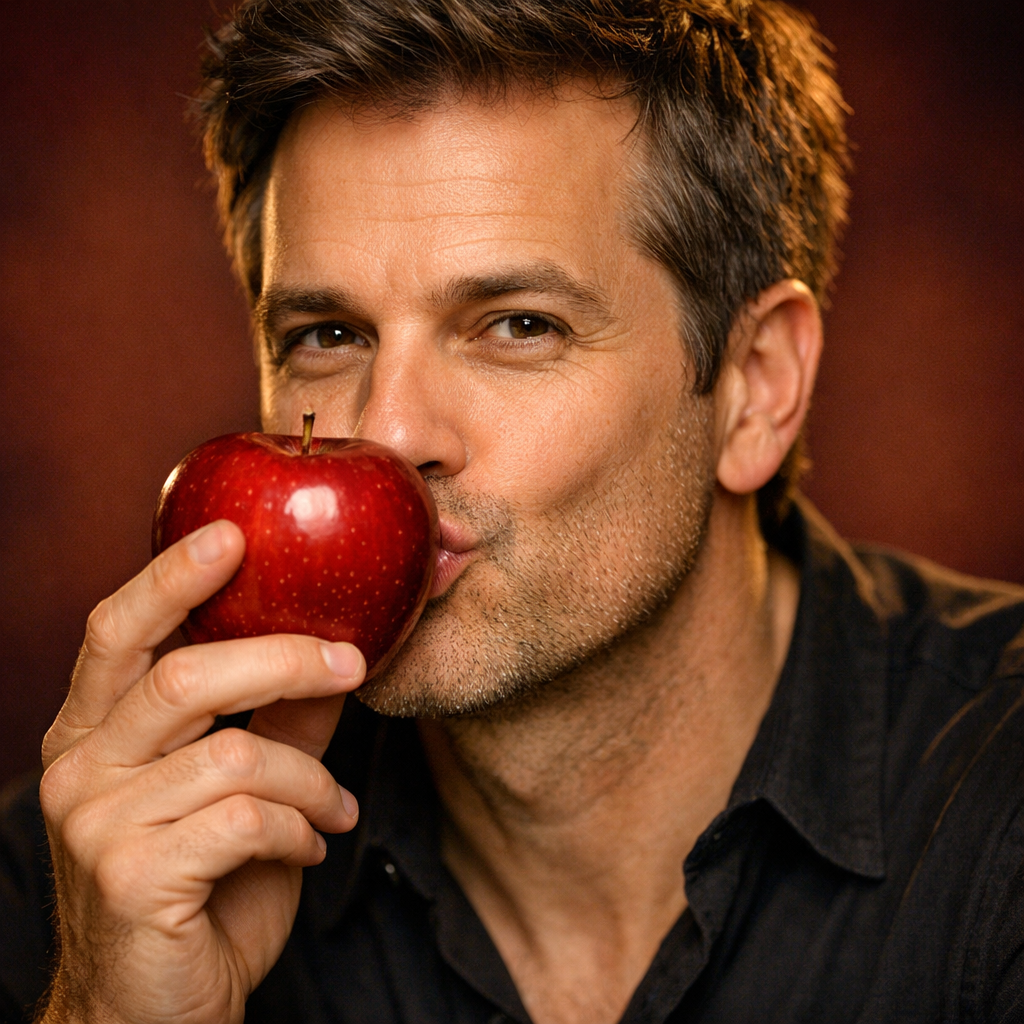
Here's something wild: the moment your lips touch someone else's, your brain kicks off a chemical reaction so complex that scientists have spent decades trying to fully map it.
We're not talking about the poetry of kissing. Not the romance. The actual, measurable, documented neuroscience of what happens when two mouths meet.
And honestly? The science is more romantic than any love song you've heard.
Your Brain on a Kiss
The instant your lips make contact, your brain's reward system lights up like Times Square on New Year's Eve. Here's the cocktail your body starts mixing:
Dopamine surges first. This is your brain's pleasure chemical, the same one that fires when you eat chocolate, win money, or scroll through social media. Except kissing triggers a more powerful hit than any of those. Dopamine creates that rush of euphoria, the "I want more of this" sensation that makes a good kiss feel borderline addictive.
Oxytocin follows close behind. Often called the "bonding hormone," oxytocin is the reason kissing feels like connection rather than just physical sensation. It's the same chemical released during childbirth and breastfeeding, designed by evolution to forge unbreakable bonds. When you kiss someone you care about, oxytocin floods your system, deepening attachment and building trust.
Serotonin joins the party. This mood stabilizer contributes to feelings of wellbeing and happiness. Low serotonin is linked to depression; kissing naturally elevates it. That calm, content feeling after a really good kiss? Serotonin.
Adrenaline and norepinephrine spike simultaneously. Your heart races. Your palms might sweat. Butterflies erupt in your stomach. That's your body's fight-or-flight response activating, but in the best possible way. The excitement, the anticipation, the slight nervousness before a kiss? All adrenaline.
Meanwhile, cortisol (your stress hormone) drops. Kissing literally reduces stress at a biological level. It's not just distraction or comfort. Your body actually produces less of the chemical that makes you anxious.
Why Your Lips Are Basically Supercomputers
Your lips contain over 10,000 nerve endings. To put that in perspective: that's more nerve density than almost any other part of your body.
When those nerves fire, they send an absolute flood of information to your brain. Temperature. Pressure. Texture. Movement. Your brain processes all of this in real time, building a sensory experience that's almost impossibly rich.
This is why a kiss feels like so much. Your lips are literally designed to feel everything, magnified. A gentle brush across your mouth registers with the same intensity as a firm grip on your arm. The lightest touch becomes an event. For a deeper look at the anatomy behind this, read our piece on why your lips are so sensitive.
Scientists who study this (yes, philematology is a real field) have found that the brain dedicates a disproportionately large area to processing lip sensations. On the sensory map of your brain, your lips take up more real estate than your entire torso.
Evolution built us to kiss. And built us to feel every single second of it.
The Evolutionary Conspiracy
Why do humans kiss at all? Plenty of animals don't. Some cultures historically didn't. So what's the biological point?
Researchers have identified several functions that kissing serves from an evolutionary standpoint:
Mate Assessment
This sounds unromantic, but stay with me. When you kiss someone, you're not just tasting their lip balm. You're unconsciously analyzing their biological compatibility.
Saliva contains all sorts of chemical information. Hormones. Immune markers. Genetic compatibility signals. Research by evolutionary biologists has shown that women, in particular, seem drawn to partners whose immune systems complement their own, something they can detect through scent and taste cues during kissing.
That "spark" you feel with some people and not others? Part of it might be your body recognizing genetic compatibility. The kiss that feels electric versus the kiss that falls flat? Your biology is whispering verdicts.
Pair Bonding
Oxytocin doesn't just feel good. It serves a function: keeping you attached to your partner. In evolutionary terms, pair bonding increased survival rates for offspring. Kissing, through its oxytocin release, reinforces the bond between partners.
This is why couples who kiss frequently report higher relationship satisfaction. It's not just correlation. The act of kissing literally strengthens the neurological bond between you.
Arousal Escalation
Saliva contains testosterone. When you kiss with an open mouth, you exchange small amounts of it. This gradually increases sexual arousal in both partners, priming the body for further intimacy.
This isn't about manipulation. It's about natural escalation. A kiss can remain just a kiss. But if things progress, the kissing has already begun preparing both bodies for what comes next.
The Physical Benefits (That Aren't Nonsense)
You'll find articles claiming kissing cures everything from headaches to cancer. Let's stick to what research actually supports:
Stress reduction is real. Measurable cortisol drops have been documented in studies. If you're anxious, kissing someone you trust will genuinely calm your nervous system.
Blood pressure improvement appears legitimate. The dilating blood vessels and increased heart rate during kissing seem to have cardiovascular benefits with regular practice. Some studies have linked frequent kissing to lower blood pressure over time.
Immune function gets a boost. Exchanging saliva exposes you to new bacteria and pathogens. In small doses, this trains your immune system. One study found that couples who kissed frequently shared more microbiome diversity, potentially strengthening immunity for both.
Pain relief has some support. The endorphin release during pleasurable kissing can create mild analgesic effects. Not enough to skip your ibuprofen, but enough that kissing might genuinely ease minor aches.
Mood elevation is well documented. Between the dopamine, serotonin, and oxytocin, kissing functions as a natural antidepressant. Couples who maintain regular physical affection show lower rates of depression and anxiety.
Why Some Kisses Feel Electric (And Some Don't)
Here's where science meets mystery.
We know that kissing triggers powerful neurochemical responses. We know that biological compatibility signals exist. We know that emotional context matters. But we still can't fully explain why a kiss with one person sends shivers down your spine while a kiss with another feels like nothing.
Some theories:
Pheromone compatibility plays a role we don't fully understand. Humans may have remnant abilities to detect chemical signals that indicate genetic fitness, even though our conscious sense of smell isn't designed for it. These signals get processed during close contact, including kissing.
Emotional context matters enormously. A kiss from someone you're wildly attracted to, anticipating, yearning for? Every nerve ending lights up. The same physical kiss from someone you feel nothing for? Muted response. Your brain amplifies or dampens the sensation based on emotional investment.
Technique is surprisingly significant. The science shows that our brains encode preferences based on past experiences. A kiss that matches your learned preferences registers as "right." One that clashes registers as "off." This is trainable. This can be developed. The best kissers aren't born; they've learned to read and respond.
What the Science Actually Teaches Us
After all this neuroscience and evolutionary biology, what's the takeaway?
Kissing isn't just romantic. It's functional. It serves your brain, your body, and your relationship in measurable ways.
Kiss more often. The health benefits compound with frequency. Couples who maintain daily kissing habits reap ongoing neurochemical rewards.
Kiss longer. Quick pecks trigger minimal response. Research suggests that kisses lasting at least six seconds start triggering meaningful oxytocin release. Make your kisses count.
Pay attention to the spark. If kissing someone feels flat, that's data. Your body is telling you something. And if kissing someone feels like fireworks, your biology is also speaking. Listen to it.
Don't let kissing become perfunctory. When kissing becomes just a habit, just a checkbox, you lose the neurological benefits. The brain responds to novelty and presence. A mindful kiss activates more than a mechanical one.
The science of kissing tells us something we probably knew instinctively: that this simple act of pressing lips together is one of the most powerful tools we have for connection, pleasure, and health.
Your ancestors evolved to kiss. Your brain is built to reward it. Your body responds in documented, measurable ways.
So maybe the next time you lean in, you'll feel it a little differently. Knowing that beneath the romance and the heat, there's an entire biological symphony playing just for you.