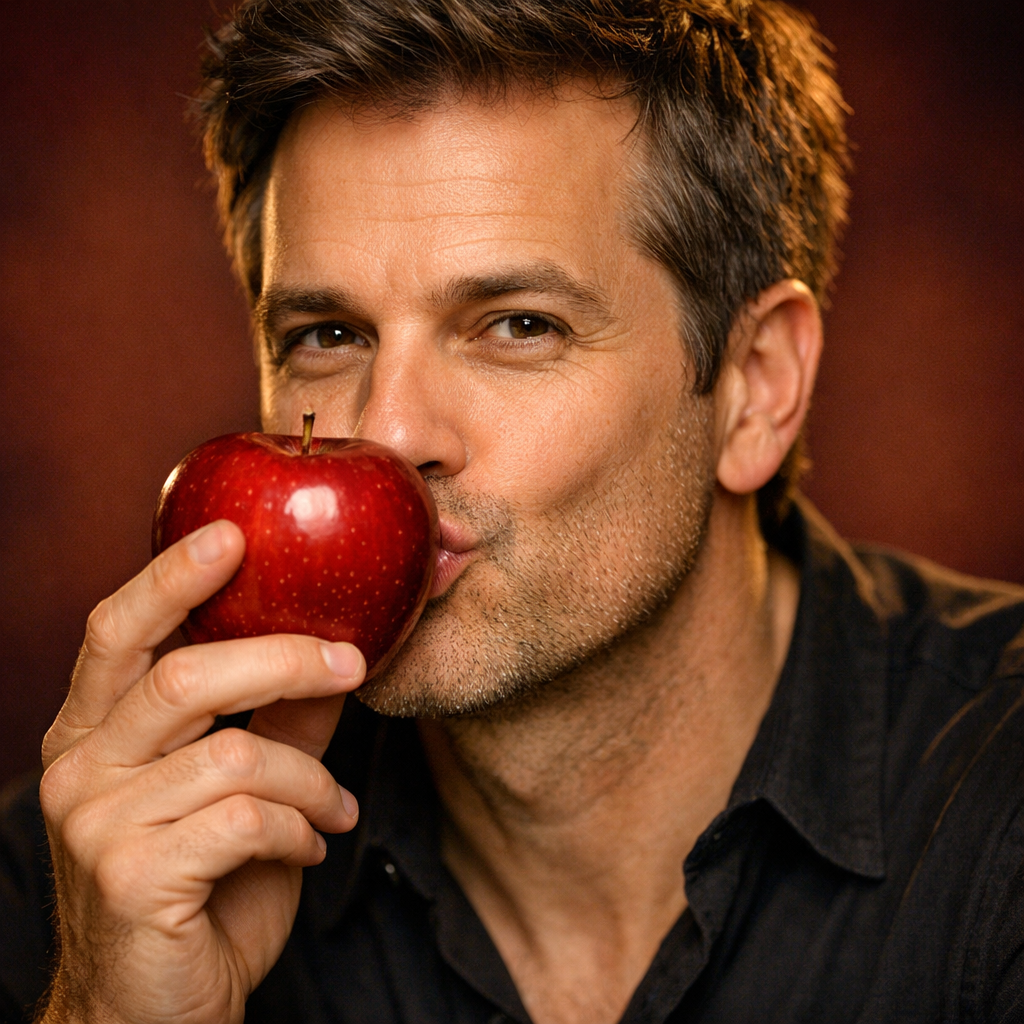
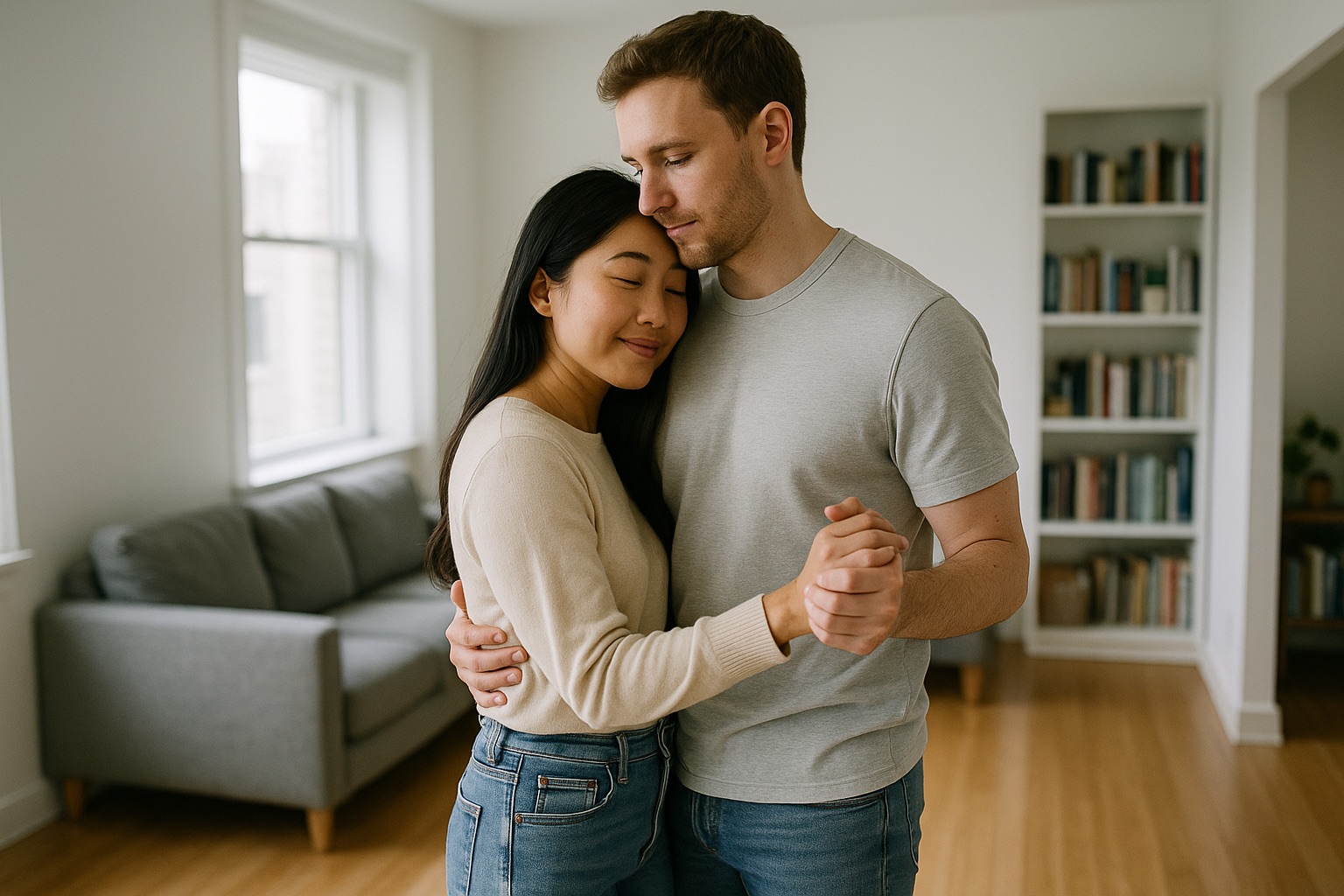
Most people think passionate kissing means turning everything up to eleven. More tongue. More pressure. More urgency. Like the move is to just do regular kissing, but harder.
And that's exactly why so many "passionate" kisses feel like being attacked by an overly enthusiastic Labrador.
Here's what nobody tells you about kissing with real intensity: it has almost nothing to do with force. The most passionate kiss you'll ever experience will probably start so softly you barely feel it. Passion isn't an accelerator pedal. It's a slow burn that makes every nerve ending in your body sit up and pay attention.
Let me show you how that works.
What Passionate Kissing Actually Is
Let me be direct: passionate kissing isn't a skill you perform. It's a state you enter.
It's what happens when two people are so completely present with each other that the rest of the world goes quiet. No phone buzzing in your pocket. No mental grocery list. No performance anxiety about whether you're doing it right. Just the two of you, fully tuned in, and the electricity that creates.
The physical mechanics matter (and we'll get there), but they're secondary to the mindset. The most technically flawless kiss in the world falls flat if the person delivering it is somewhere else mentally. And a simple, closed-mouth kiss from someone who is right there with you, fully locked in? That can rearrange your entire week.
The science backs this up. When you're genuinely present during a kiss, your brain floods with dopamine, oxytocin, and adrenaline simultaneously. That cocktail is what makes a kiss feel electric. You can't fake that neurochemistry by pushing harder. You trigger it by paying attention.
The Difference Between Passionate and Aggressive
This distinction matters, because a lot of people get it wrong and never realize it.
Aggressive kissing is one-directional. It imposes. It pushes. It says "I want this" without checking whether the other person is right there with you. It often comes from anxiety masquerading as confidence: trying to prove something instead of feel something.
Passionate kissing is a conversation. It escalates together. It reads the other person's body like a musician reads their bandmates. When your partner leans in, you meet them. When they pull back slightly, you let the tension breathe instead of chasing. Every move is a response to a response.
The difference feels obvious to the person being kissed. One makes them want to get closer. The other makes them want to create distance.
How to Build from Zero to Scorching
The best passionate kisses don't start passionate. They arrive there. Here's the escalation that makes the whole thing work.
Start Impossibly Light
Begin with barely-there contact. Lips brushing against lips so gently it almost tickles. Your lips contain over 100 times more nerve endings than your fingertips, so this featherlight touch actually registers as intensely pleasurable. More than you'd expect.
This isn't timidity. This is strategic. You're priming every nerve ending before you give them what they want.
Let the Pause Do the Work
After that first soft contact, pull back just slightly. Not far. An inch. Maybe two. Stay close enough that you can feel each other's breath. Hold there.
This is the move that separates good kissers from people who will live in your memory forever. That pause, that almost-touching space where anticipation builds until it's nearly unbearable? That's where passion lives. The art of teasing with a kiss is really the art of making someone want the next one so badly they can feel it in their chest.
Increase Pressure Gradually
When you come back for more (and you will), increase the pressure by maybe ten percent. Not fifty. Not "I'm going to push my face into yours." Just a little more intentional. A little more deliberate.
Each return should have slightly more weight behind it. Think of it like turning a volume dial one notch at a time instead of slamming it to max. By the fifth or sixth kiss, what started as a whisper has become something entirely different, and the buildup is what makes it hit so hard.
Introduce Your Hands
This is where most people make a critical mistake: they either keep their hands frozen at their sides like a tin soldier, or they go full octopus at exactly the wrong moment.
Where you put your hands during a kiss is a parallel conversation. As your kisses deepen, your hands should follow the same gradual escalation. Start with a hand on their jaw or the side of their neck. As intensity builds, let your fingers slide into their hair. Pull them closer by the small of their back. Each touch should feel like a natural extension of what your mouth is doing, not a separate event.
Add Tongue Only When the Kiss Asks for It
Tongue is not a timer-based event. You don't get three minutes in and flip the tongue switch. You introduce it when the energy between you has built to the point where closed-mouth kissing isn't enough anymore. You'll feel it. So will they.
When you do, think of it as a light brush against their lower lip. An invitation, not an invasion. Let them respond. If they open up to you, proceed gently. The tip of the tongue has more nerve endings than almost any other body part; you don't need to use the whole thing to create an overwhelming sensation.
French kissing done right is the natural next chapter of this escalation. It shouldn't feel like a gear shift. It should feel like the conversation just got more interesting.
Five Moves That Create Real Intensity
The escalation framework gets you to passionate. These moves keep you there.
The Slow Pull
Mid-kiss, gently take their lower lip between both of yours and pull back slowly. Not a bite (we'll get to that). Just a soft, deliberate tug that creates a moment of tension before release. Lip biting is the advanced version of this, but the pull alone is enough to make someone forget their own name.
The Forehead Touch
Break the kiss, but keep your forehead pressed against theirs. Eyes closed. Breathing together. This isn't a rest stop. It's an intensifier. It says "I'm not done with you, I just need to feel this for a second." The anticipation it creates for the next kiss is almost cruel.
The Neck Detour
Move your mouth from their lips to their neck. Just below the jaw, where the skin is paper-thin and packed with nerve endings. A soft kiss there, or even just your breath against that spot, sends a signal through their entire body that a mouth-on-mouth kiss can't replicate.
This change of location keeps the experience from becoming monotonous and adds a dimension that most people never think to explore.
The Full-Body Press
Passionate kissing becomes something else entirely when your whole body is involved. Close the gap between you. Chest to chest. Hips aligned. One hand in their hair, the other pulling them in by the waist.
This isn't about being aggressive. It's about removing the distance that makes a kiss feel like an isolated event. When your whole body is part of the conversation, the kiss becomes immersive instead of merely nice.
The Deliberate Slowdown
Counterintuitive, but hear me out. Right when things are at their most intense, deliberately slow everything down. Make your kisses longer, softer, more drawn out. Kissing slowly at a peak moment is like pressing the brake on a rollercoaster at the top of the hill. The contrast creates a surge of intensity that speeding up never could.
Why Your Breathing Changes Everything
Most people hold their breath when they kiss intensely. Understandable. Also a terrible idea.
Learning to breathe while kissing isn't just practical; it's one of the most powerful tools for creating passion. Here's why: audible breathing is one of the most honest signals of arousal we have. When you let your partner hear your breath catch, or feel it quicken against their skin, you're giving them real-time feedback that no words could match.
Breathe through your nose during contact. Let your exhale land on their skin between kisses. And don't be afraid to let a small sound escape. Not performance moaning. Just the natural sounds of someone who is genuinely affected. That authenticity is more magnetic than any technique in this article.
Mistakes That Kill the Passion
Knowing what to do matters. Knowing what to avoid might matter more.
The Washing Machine. Tongue circling in a relentless pattern with no variation. If your tongue has a predictable orbit, your partner stopped feeling it ninety seconds ago. Vary your movements. Stop. Start. Change direction. Surprise them.
The Face Grabber. Holding someone's face with both hands while kissing them can feel incredible or feel like being held in a vise. The difference is pressure. Cradle, don't clamp. Your fingertips should be doing the touching, not your palms.
Skipping the Build. Going from zero to full intensity with no escalation is like watching a movie that starts at the climax. Technically exciting, but you feel nothing because there was no journey. Even if you've practiced every move in isolation, without the build, they're just moves.
Ignoring Feedback. If your partner pulls back, slows down, or goes still, that's communication. Passionate kissing means being attuned enough to read those signals and respond. Not bulldozing past them because you're "in the moment."
Forgetting the Rest of the Body. Your mouth is important. It is not the only thing touching them. Height differences, arm positions, where you're standing, how your body is angled: all of this shapes the kiss. A passionate mouth-kiss paired with rigid, disconnected body language sends mixed signals.
The Paradox of Restraint
I'm going to tell you the least intuitive thing about passionate kissing.
The people who kiss with the most fire aren't the ones who never hold back. They're the ones who choose when to let go. Restraint isn't the opposite of passion. It's what gives passion its meaning.
Think about it: if every kiss you share is at maximum intensity, none of them are. Intensity requires contrast. The soft kiss on the corner of the mouth. The pause where you just look at each other. The moment you pull back when every cell in your body wants to lean in. Those are the choices that make the next kiss feel like it could level the building.
Passionate kissing isn't about doing more. It's about feeling more. And feeling more requires being brave enough to slow down, pay attention, and let the moment breathe.
That's not a technique. That's a philosophy. And it works better than anything else I've ever seen.
The kiss that changes everything doesn't announce itself. It sneaks up through patience, presence, and the courage to feel without rushing.
Frequently Asked Questions
How do you kiss more passionately?
Start slow, build gradually, and stay completely present. Passionate kissing is less about force and more about attention. Use your hands, vary your intensity, incorporate pauses, and let your body language match the energy of the kiss. The escalation from gentle to intense is what creates real fire.
What's the difference between making out and passionate kissing?
Making out is an activity; passionate kissing is a quality. You can make out without passion (mechanical, going through the motions) and you can kiss passionately for thirty seconds without it becoming a full session. Passion is about how present and connected you are, not how long the kiss lasts.
Can you learn to be a more passionate kisser?
Absolutely. Passion isn't a personality trait you're born with. It's a combination of presence, reading your partner, and having the courage to escalate intentionally. The more you practice being attuned to your partner's responses, the more naturally intensity flows.
Why do some kisses feel passionate and others don't?
Connection. Two people who are fully present and attuned to each other will generate more intensity in a single kiss than two people who are going through the motions for an hour. Passion comes from mutual engagement, not physical mechanics alone.
How do I make a kiss feel more intense without being aggressive?
Focus on restraint and contrast. Start lighter than you think you should. Use pauses. Let the intensity build organically instead of imposing it. Pull back at peak moments to let the tension reset. Intensity created through escalation always hits harder than intensity applied from the start.