I watched it happen at a party once. A friend finally leaned in on someone he'd been flirting with all night. The timing was right. She tilted her head toward him. And his arms locked at his sides like a penguin waiting for a bus.
The kiss itself was fine. The arms were not. She pulled back after three seconds, smiled politely, and went to find a drink.
Hands are the part of a kiss nobody rehearses, so they're where the nerves leak out: frozen, hovering, patting, or grabbing too much too fast. This is the fix. Where your hands go, in what order, how that changes when you're standing, sitting, taller, shorter, or making out, and the places to keep them away from.
Where to Put Your Hands When Kissing: One High, One Low
Here is the rule that fixes most hand panic: one hand high, one hand low.
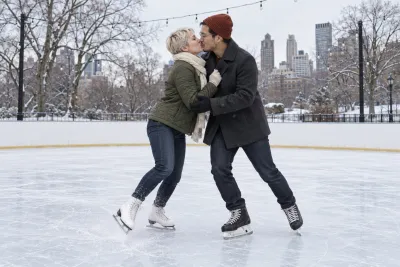
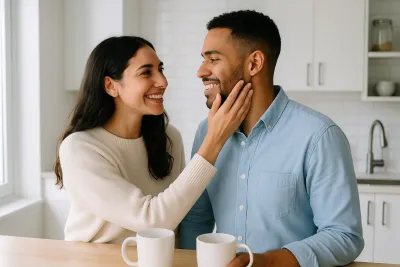
The high hand goes on their jaw, their cheek, the side of their neck, or the back of their neck. It steadies the angle of the kiss and says I'm here, with you, on purpose.
The low hand goes on their waist or the small of their back. It holds the distance between you, and it's how you draw them closer without saying a word.
That's the base position. Everything else in this guide is a variation on it.
How to hold someone's face while kissing
The face hold is the most useful thing your hands can do, and most people do it slightly wrong. The exact version:
- Palm along their jaw and the lower cheek.
- Thumb resting on the cheekbone, well away from the eye and the corner of the mouth.
- Fingertips reaching back toward the ear or into the hairline.
- Pressure: the weight of your hand and nothing more. You're holding, not steering.
If you do steer, steer by tilting, never by pulling. A hand that pulls someone's face into yours feels like a trap. A hand that tilts their chin a few degrees feels like a question.
The touch map, from safest to boldest
Where your hands can go depends on how close you already are, and that isn't just etiquette. In a 2015 study, 1,368 people in five countries colored in body maps showing where each person in their life was allowed to touch them. Strangers got the hands and not much else. The closer the bond, the more of the body opened up, and partners were allowed nearly everywhere.
A kiss walks you along that same scale, one step at a time:
- Hands, forearms, upper arms, shoulders. Fine before and during almost any kiss. Start here when you're unsure.
- Jaw, cheek, upper back. First-kiss territory, once the kiss is clearly mutual.
- Waist, small of the back, back of the neck. Your low anchor, and the warm-up for more.
- Hair, hips, pulling their body against yours. For when they're kissing you back with real enthusiasm.
- Under clothes or below the belt. Not kissing advice anymore. That's a separate conversation, and it deserves an actual one.
Where to Put Your Hands During a First Kiss
A first kiss is where hands matter most and where people have the least idea what to do with them. The rule: start with one hand, somewhere you've already touched tonight.
If you've been bumping knees on the couch, or they held your arm crossing the street, that's your starting spot. It's already been approved, so it won't surprise them.
The sequence I'd use:
- Before you lean in: rest a hand on their forearm, their hand, or the side of their arm. It doubles as a test. If they lean into it, you're good. If they go still or shift away, wait.
- As you lean in: bring that hand up to their jaw, slowly enough that they see it coming.
- Once they kiss you back: let your other hand find their waist or upper back. Light. No pulling yet.
- As the kiss ends: keep the jaw hand where it is for a beat while you pull back. It turns the end of the kiss into a moment instead of an exit.
Skip on a first kiss: hands on the hips, gripping hair, hauling them against you, anything lower than the waist. All fine later. Just not first-kiss energy.
If you're the one being kissed
Your hands have the easier job: answer. One hand to their waist, chest, or shoulder says yes without a word. A hand up to their jaw or the back of their neck says yes, and keep going. The rest of those first three seconds are in how to kiss back.
Where to Put Your Hands When One of You Is Taller
Height changes the job. The taller person's hands are there to support. The shorter person's hands are there to pull.
If you're taller: the low hand goes flat on the small of their back, so they can lean into you instead of balancing on their toes. The high hand goes to their jaw and tilts their chin up a few degrees while you bend to meet them. Don't haul their face up to yours. Let your own knees and neck cover the distance.
If you're shorter: your hands do the pulling. Lace your fingers behind their neck, or take a small handful of their shirt at the collar or chest, and draw them down to you. It closes the gap, and it happens to be one of the most flattering things you can do to a taller person.
That's where the old "arms around the neck, hands on the waist" pairing comes from, by the way. It's a height thing, not a rule about who does what. If you're the same height, pick whichever pair feels good and swap halfway through.
For big gaps and sore necks, there's a full height difference playbook, and kissing standing up covers your feet and balance.
Where to Put Your Hands When Kissing Sitting Down
Sitting side by side, one of your arms is always on the wrong side. Here's how to use both.
On a couch: the arm nearest them goes along the back of the couch, then down around their shoulders. The far hand crosses over to their jaw. That crossing hand is also what turns your shoulders toward them, which is most of what makes a couch kiss comfortable instead of a neck workout.
At a table or a bar: turn on your seat, not just your neck. Your hand over theirs on the table, then up to their jaw, is the clean version. A hand on their knee is bolder than it looks, so save it for when you've already been touching.
In a car: rest a forearm on the console and put your other hand on their jaw or the back of their headrest. The console has its own fixes in how to kiss in a car.
Lying down: one arm ends up trapped under somebody. Slide it under their neck, where it can still play with their hair, and let the free hand do the rest. Kissing lying down has the full dead-arm fix.
What to Do With Your Hands While Making Out
Once a kiss turns into a make-out, frozen hands turn into the opposite problem: hands that go everywhere at once and don't mean anything anywhere. Three habits fix it.
Move one hand at a time. One hand stays anchored while the other travels. Two hands roaming at once reads as frantic. One moving while the other holds reads as deliberate.
Go slower than feels natural. This one has actual science behind it. When researchers stroked volunteers' forearms with a soft brush at different speeds, the strokes rated most pleasant weren't the fastest or the slowest but an unhurried middle speed, 1 to 10 centimeters per second (roughly half an inch to four inches a second), and those were exactly the speeds that made a special class of touch nerves fire hardest. In practice: a stroke from their shoulder blade down to their waist should take a few seconds, not one.
Leave room to close. Pulling them against you only lands if there was some space first. Hold them close, ease off an inch, then pull them in again.
The moves that earn their place once you're both clearly into it:
- Fingers into their hair. Slide in from the temple or behind the ear toward the crown. Slowly.
- A handful of hair at the roots. Only after the light version got a good reaction. Hold, don't tug. Some people love it, and some really don't.
- A warm hand on the back of the neck. Firm enough to feel, and it tilts their head into the kiss.
- A fist of fabric. The back of their shirt, or the collar. It says closer without your hands going anywhere new.
- Hips toward you. Both hands at their hips or the small of their back, drawing them in.
- The spine. Fingertips up their back, one vertebra at a time, over the shirt.
For everything else about a make-out (pacing, breaks, where it goes from there), see how to make out.
Where Not to Put Your Hands When Kissing
Some of these are about respect. Some are just about not being weird. All of them have an easy fix.
The front of the throat. The side and back of the neck, yes. The front, no. Even light pressure there can read as a threat. Fix: keep your thumb on the jaw, never under it.
The head clamp. Both hands locked on their head so they can't ease back. It makes the kiss feel like something happening to them. Fix: hold loosely enough that they could pull away at any moment. They always should be able to.
The head shove. A hand on the back of their head pushing their face into yours. Fix: draw them in from the waist instead. Bodies can be pulled close. Faces should arrive on their own.
Chest, butt, and below the belt. Not on a first kiss, not uninvited, and never as a surprise. If you want more, ask. The words are in the next section.
Under their clothes. Same rule. Over the shirt is kissing. Under it is a different question, and it gets asked out loud.
The cold, wet drink hand. Set the glass down and dry your palm on your own jeans before it goes anywhere near their face.
Their glasses and earrings. Knock either one and the moment's gone. The face hold sits along the jaw, below the frames.
Your phone. Put it down. A hand holding a phone is a hand that's somewhere else.
And the four habits that ruin good placement:
- The penguin. Arms locked at your sides. Fix: one hand anywhere on the map. Even their forearm beats nothing.
- The hover. Hands floating an inch off their body like they might be hot. Fix: land them. Flat palm, full contact.
- The tapper. Fingers drumming or patting because you're nervous. Fix: hold still. A still hand on the small of their back is calmer than a busy one anywhere.
- The statue. One position for five straight minutes. Fix: move one hand now and then, even an inch.
What to Do If They Move Your Hand
This happens to everyone, and how you handle it matters more than where your hand was.
If they move it somewhere safer (off their hip and up to their waist, say): leave it exactly where they put it. That was a clear, kind answer. Don't drift back to the old spot later that night, and don't make a thing of it. No big apology, no stopping the kiss. Keep going, a notch gentler.
If they move it somewhere bolder: that's an invitation to that spot, not to everywhere. Enjoy it and let them keep leading.
If they go still or lean away: bring your hands back to the safe zone, arms and shoulders, and ease the kiss down. If you're not sure what that meant, ask.
The good signs are easy to read once you look for them: they press closer, their breathing changes, they mirror you (you touch their face, they touch yours), and their own hands start to move. The signs to ease off are quieter: a small stiffening, a lean away, stillness where there was movement.
What to say
Asking doesn't kill the mood. Asking like a flight attendant does. Keep it short, low, and close to their ear:
- "Is this okay?"
- "Do you like that?"
- "Show me what you like."
The last one is the best of the three. It hands them the wheel, and you'll learn more from where they put your hand than from an hour of guessing.
What to Do With Your Hands If You Freeze Up
If your brain empties the second your lips touch theirs, plan your hands the way you'd plan an opening line. Before the kiss, make two decisions: where your high hand goes (their jaw) and where your low hand goes (their waist). Two choices, made in advance, so there's nothing left to think about when it counts.
Then practice the landing, not the kiss. Next time you hug someone you're close to, notice what your hands do. Flat and still, or hovering and patting? Hands that know how to hold someone in a hug already know how to hold someone in a kiss.
If it's your whole body that locks up, not just your arms, read what actually matters with first kiss nerves.
That friend from the party figured it out, by the way. One hand on the jaw, one on the waist. Nobody has called him a penguin since.