Let's acknowledge the elephant in the room: you're reading an article about practicing kissing. Alone. Probably on your phone in your bedroom with the door closed.
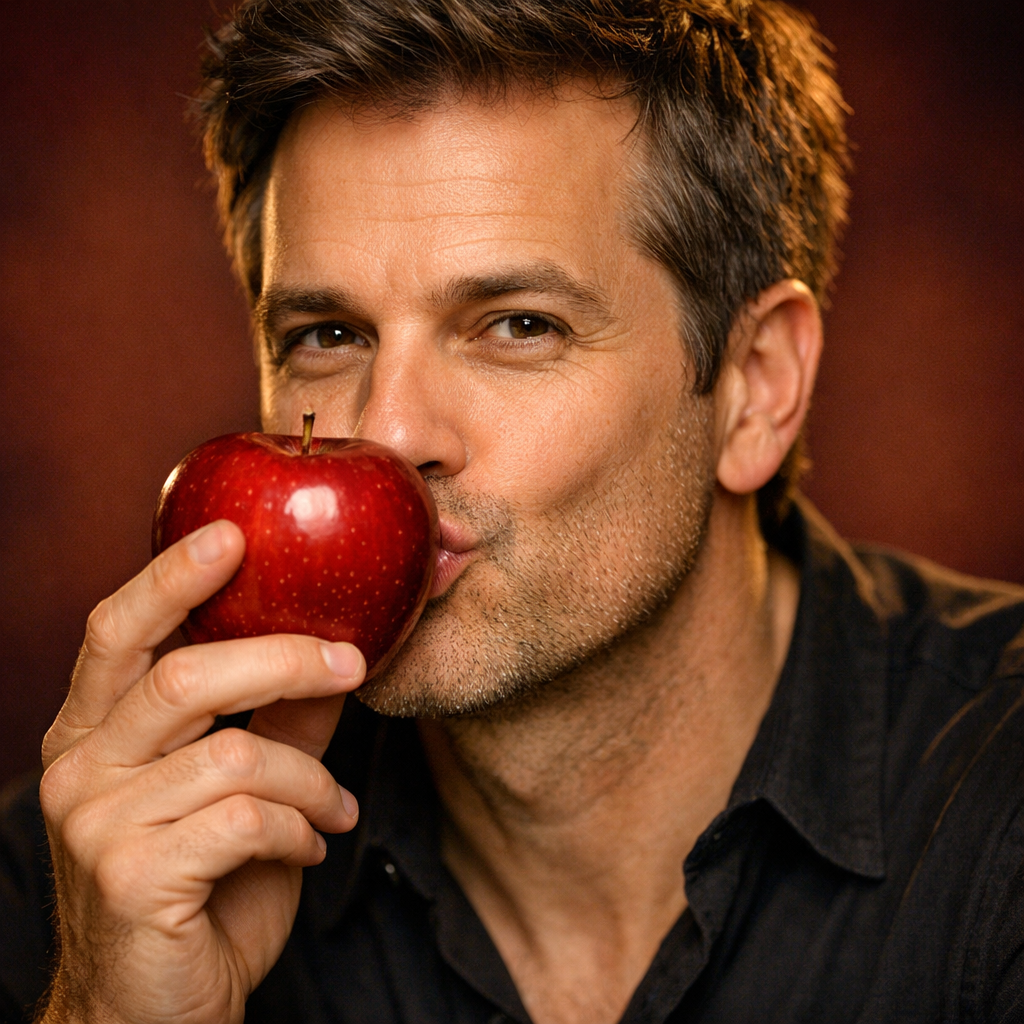
No judgment here. Because here's something I rarely admit: before my first real kiss, I absolutely practiced. On my hand. On my forearm. Once, embarrassingly, on a peach. (The internet told me fruit was helpful. The internet lied.)
The desire to prepare makes complete sense. Kissing feels like a test you never studied for, and the stakes feel enormous when you're inexperienced. What if you're terrible? What if they notice? What if you bump noses or miss their mouth entirely or do that thing with your tongue that you've heard is awful but aren't sure what it even is?
I get it. And I'm going to be honest with you about what actually helps, what's mostly theater, and what really matters when lips finally meet.
The Hard Truth: What You Can't Practice Alone
Let me save you some time and awkwardness. There are aspects of kissing that simply cannot be practiced solo, no matter how creative you get with produce or pillows or the back of your hand.
You can't practice responsiveness. Great kissing is a conversation. It requires reading what your partner is doing and adjusting in real time. A pillow doesn't lean in when you pull back. Your hand doesn't part its lips when you deepen a kiss. The most crucial skill in kissing is paying attention to someone else's responses, and that requires... someone else.
You can't practice the energy exchange. There's something that happens when you kiss another person that has nothing to do with technique. Call it chemistry, electricity, connection. It's the feeling of their breath mixing with yours, the warmth of their proximity, the subtle tension of two nervous systems synchronizing. This can't be simulated.
You can't practice adjusting to a real partner. Everyone kisses differently. Some people are aggressive; others are tentative. Some use lots of tongue; others barely any. Being a better kisser means learning to read and match your specific partner, and that's always learned in the moment, with that person.
So if you're hoping to emerge from your bedroom as a certified expert based on solo drills? That's not how this works.
But that doesn't mean practice is pointless.
What You Can Actually Practice
While the interactive elements of kissing require a partner, there are foundational skills you can develop on your own. Think of it like a musician practicing scales: it won't make you a rock star, but it builds the underlying competence that lets talent emerge.
Lip Awareness and Relaxation
Most first-time kissers make the same mistake: they tense up. Their lips become rigid, pressed together like they're bracing for impact. This feels terrible for the other person, like kissing a wall.
You can practice keeping your lips soft and relaxed. Stand in front of a mirror. Let your jaw relax. Let your lips part slightly, naturally. Notice if you're holding tension. Practice releasing it.
Your lips should feel pliable, not pursed. Soft, not slack. There's a sweet spot between "kissing fish face" and "completely limp." Find it.
Honestly? This exercise alone puts you ahead of most nervous first-timers who lock their mouths up like bank vaults.
Breath Awareness
Anxious people hold their breath. And nothing kills a kiss faster than desperately gasping for air thirty seconds in because you forgot you needed oxygen.
Practice breathing through your nose while your lips are slightly parted. Get comfortable with it. When you're actually kissing someone, you'll naturally take small breaths through your nose during softer moments, and you'll use brief breaks to breathe more deeply.
The goal is making breathing feel automatic so you're not thinking about it when the moment arrives.
Head Tilt Mechanics
Two faces approaching head-on is a recipe for a nose collision. Someone needs to tilt.
In front of a mirror, practice tilting your head slightly to one side. Notice how it would create clearance for someone approaching from the front. There's no "correct" side; most people naturally tilt right, so tilting left can actually work better. But the key is having the awareness that tilting is necessary.
You'll adjust this in the moment based on what your partner does, but knowing that you need to tilt removes one variable from the chaos of a first kiss.
Hand Placement Comfort
Your hands need somewhere to go, and "dangling awkwardly at your sides like a confused penguin" isn't it.
Practice the motion of bringing your hand to someone's face. Cupping an imaginary cheek. Resting your hand on an imaginary waist. Knowing what to do with your hands reduces cognitive load when you're already nervous about the lip part.
This feels silly. Do it anyway. Muscle memory is real.
The Internet's Terrible Advice (Evaluated)
If you've searched "how to practice kissing," you've encountered some suggestions. Let me save you some trial and error.
"Kiss Your Hand"
Verdict: Actually somewhat useful.
Your hand won't feel like lips. But it can teach you one important thing: how much pressure you naturally apply. Most people press way too hard when they're nervous. Kissing your hand and consciously reducing pressure until it's feather-light helps calibrate your default setting.
Press your lips to the back of your hand. Notice how hard you're pressing. Now reduce it by half. Then half again. That lighter touch is closer to where you want to be.
"Kiss a Pillow"
Verdict: Mostly useless.
A pillow has no lips, no response, no feedback. You're just... kissing fabric. If it helps you feel less nervous, fine, but you're not learning anything meaningful about kissing technique. You're learning how to kiss pillows.
"Practice on Fruit"
Verdict: Weird and unhelpful.
The theory is that fruit mimics the softness of lips. The reality is that you're now standing in your kitchen making out with a peach, getting juice on your chin, and you're no better at kissing humans.
I tried this. I felt ridiculous. I learned nothing except that peaches are better eaten than kissed.
"Watch Videos and Visualize"
Verdict: Surprisingly useful.
Your brain can't fully distinguish between vividly imagined experiences and real ones. Watching kissing scenes in movies (good ones, not aggressive ones) and then closing your eyes to imagine the sensations can actually prime your nervous system for the real thing.
Don't make it weird. But a little mental rehearsal isn't crazy. Athletes do it. Performers do it. You can too.
The Real Preparation That Matters
Here's what I wish someone had told me before my first kiss: technique matters far less than you think, and something else matters far more.
Confidence.
Not arrogance. Not a performance of certainty you don't feel. Just a basic willingness to show up, be present, and participate without excessive apology or hesitation.
The people who are "bad" at kissing usually aren't bad because of poor technique. They're bad because they're so trapped in their own heads, so worried about doing it wrong, that they're barely present. They're running a constant internal commentary of self-judgment instead of actually feeling what's happening.
Nerves are normal. Everyone has them. But the goal is to feel the nerves without letting them take over. To be nervous and present. Anxious and engaged.
How do you build that confidence? Some of it comes from the physical practice elements I mentioned. Some comes from simply deciding that this is going to be an experience you're curious about rather than a test you might fail.
And some of it comes from accepting a truth that might be hard to hear: your first kiss probably won't be perfect. Neither will your second. Or fifth. And that's actually fine.
The Permission You Might Need
Great kissers aren't born. They're made through experience. Every person you think of as a naturally good kisser had a first kiss that was probably awkward. They got better by doing it, noticing what worked, adjusting, and doing it again.
You don't have to be perfect out of the gate. You just have to be present, pay attention, and be willing to learn.
So yes, practice what you can. Get comfortable with your lips and your breathing and your hand placement. Visualize. Build whatever foundation makes you feel more prepared.
But when the moment comes, let go of the practice and the preparation. Stop performing. Stop evaluating yourself.
Just be there, with them, paying attention to what's actually happening.
That's what makes a kiss good. Not the hours of practice. Not the perfect technique. Just two people, present together, figuring it out as they go.
That's the part you can't practice alone. And honestly? That's the part that makes it worth doing.