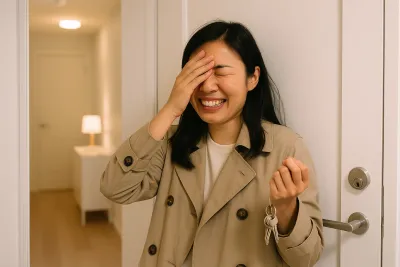
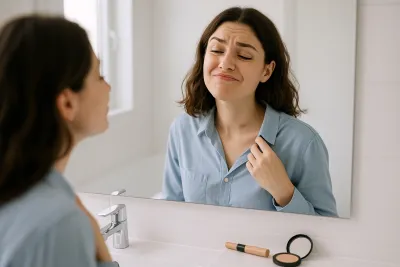
Somewhere out there is a person you genuinely like. Great taste in movies. Texts back at a reasonable hour. And when they lean in to kiss you, a tiny dread flickers on anyway, because you know what's coming: water.
If that's where you are, notice what you're actually asking. Not how to end things with a wet kisser. How to tell someone the kiss is too wet without making it a whole thing. You want to keep this person. You'd just prefer to stop needing a towel afterward.
Take heart: too-wet kissing is the most fixable problem in all of kissing. Better still, most of the time you can fix it without saying a word. And for the day you do need words, I'll hand you the exact ones.
The Short Answer, Before We Go Deeper
Fix it silently first. Slow the kiss way down, keep your own lips closer to closed, and steer things back to soft, lips-only kissing. Kissing is a mirroring activity; most people recalibrate to match you within a minute, without ever knowing a correction happened.
If the pattern survives the silent fix, use words, and frame them as desire instead of critique. Not what they do wrong: what you want more of. Kiss me really slowly for a while lands beautifully. Your kisses are too wet leaves a mark.
That's the whole strategy. Everything below is how to pull it off: the wordless method, the scripts, the timing, and the short list of things you should never do.
Why Kisses Turn Into Puddles
Before you fix it, know what you're dealing with, because the diagnosis should soften you toward the accused.
- Nerves. Anxiety and excitement both crank up saliva production. The person kissing you like a wave pool may simply be thrilled about you, which is an almost annoying thing to learn, I know.
- The aperture problem. Their mouth opens wider than yours. Two mismatched ovals leave a gap, and the gap fills with exactly what you think it fills with.
- Tongue too early, tongue too much. Tongue arrives with moisture attached. Deployed in the first three seconds, it turns a greeting into a rinse cycle.
- Movie education. On screen, visibly hungry kissing reads as desire, so a lot of people grew up believing wet equals wanted. Nobody ever pulled them aside to say otherwise.
Notice what's missing from that list: carelessness, selfishness, being beyond help. A wet kisser is almost always an eager kisser with a calibration problem. That should change how you feel about the conversation you've been dreading. You're not delivering a verdict. You're adjusting a dial.
One more reframe while we're here: kissing is a shared-saliva activity by design, and the science of kissing is unapologetically damp. The problem is never that moisture exists. The problem is volume.
The Dimmer Switch: Fixing It Without Words
Kissing is one of the most mirror-driven things two people do. Speed up, and your partner speeds up. Soften, and they soften. Which means you're holding a control most people never realize they have: set the kiss you want, and let them match it. I call it the Dimmer Switch, and it has four moves.
Cut the tempo in half. Not subtly. Slow kissing physically cannot produce the same slosh as fast kissing: less motion, less mixing, less mess.
Narrow your aperture. Bring your lips nearly together even while theirs are wide. Within a few kisses, their mouth will shrink toward yours. You're not pulling away; you're reshaping the doorway, and their mouth follows the doorway.
Reset to lips-only. Take their lower lip softly between yours, hold it a beat, release, repeat. That catch, hold, release mechanic is the great equalizer: nobody on earth can be sloppy while doing it, because the tongue has no way in.
Deploy the pause. Break the kiss, smile, breathe against their cheek for two or three seconds, then come back at half the intensity. Pauses reset momentum, and momentum is where wetness lives.
Run that sequence and hold it there. Lips register featherweight changes in pressure (they're some of the most sensitive territory on the human body), which means your partner's lips are reading yours constantly. Most people adjust without a flicker of awareness that anything was corrected. This isn't manipulation. It's leading a dance, and someone has to.
And when they get it right? Respond. Warmly, audibly, unmistakably. One small appreciative sound during a soft kiss teaches more than any speech you will ever give.
How to Tell Them the Kiss Is Too Wet: The Scripts
Sometimes the Dimmer Switch isn't enough. Some kissers are enthusiastic enough to override the mirror, bless them, and some habits are too settled to redirect silently. Words it is.
The delivery rules first, because they matter more than the lines:
- Frame everything as what you want more of, never as what they do wrong.
- Say it in warmth, mid-affection, not in the frosty aftermath of a kiss you hated.
- Say it once, clearly. Don't let it become a running bit at their expense.
- Reward the change fast and often. Reinforcement finishes what the words start.
Now the actual words.
The mid-kiss redirect. Pull back an inch, keep your hands on them, and murmur: Kiss me slower. Yeah, like that. This is the highest-percentage line in this entire article. It reads as wanting more, not less, and no one in recorded history has been offended by it.
The demonstration offer. Can I show you my favorite way to be kissed? Then show them: soft, unhurried, lips-first. People remember what they felt far longer than what they were told.
The pillow debrief. Later, when you're tangled up and content (not thirty seconds after a kiss you had feelings about), try: You know what absolutely wrecks me? When you kiss me really soft and slow. I need more of that in my life. That's a complete correction disguised as a craving.
The direct one, for the repeat case. If the gentler routes haven't landed: Sometimes the kissing gets a little wet for me. Lighter on the tongue and I'm in heaven. Everything else, don't change a thing. Clear, specific, and bracketed on both sides by keep-going.
The humor version, established couples only. Babe. I adore you. I also need a towel. Said with a grin and followed immediately by a kiss, inside a relationship with a healthy silliness budget. Never with someone new; new people can't yet tell your teasing from your judgment.
If you want the playbook for this entire genre of conversation, I've written a full guide to telling someone they're a bad kisser without crushing them. The wet kiss is simply the most common reason anyone needs it.
What Never to Do
A few moves feel satisfying in the moment and cost you a month of weirdness. Skip every one of these.
- The visible wipe. Dragging the back of your hand across your mouth where they can see it is a review, and a brutal one. If you must dry off, do it inside a hug, over their shoulder, like a civilized person.
- The flinch. Going rigid or recoiling mid-kiss tells them something is wrong without telling them what. All of the sting, none of the instructions.
- The identity verdict. You're a sloppy kisser converts one adjustable behavior into a character trait. People change behaviors. They defend identities.
- The committee. Telling your friends before you've told them. It always travels, and it travels with commentary.
- The comparison. Any sentence with an ex in it is a grenade with the pin already out.
- The long fester. Enduring it silently for eight months, then detonating over one kiss. By that point you're not correcting technique, you're prosecuting a backlog.
If You Are the Wet Kisser
Maybe you arrived here from the other side. Maybe someone sent you this link, in which case: they like you, or they wouldn't have bothered. Either way, take a breath. Wet kissing is made, not born, and it unmakes fast.
I say this from experience. In my early twenties, someone I was seeing finally cupped my face mid-kiss and whispered: easy, I'm not going anywhere. It stung for roughly four seconds. It upgraded every kiss I've given since. That person did me a favor nobody else had the nerve to do.
Since almost nobody gets honest feedback, here's the self-check:
- Somebody's chin needs attention after you kiss.
- Your tongue shows up within the first few seconds, most kisses.
- Your partner keeps their mouth noticeably smaller than yours, or angles away as the kiss builds.
- Kisses keep ending sooner than you'd like, sometimes with a small pat.
Two or more of those, and the fix is four habits.
Swallow first. Right before you lean in. Unsexy to read, invisible in practice, transformative in result.
Lips before tongue, by a wide margin. Let the kiss stay entirely lips for longer than feels natural. When tongue joins, it's a guest making a brief appearance, not a resident.
Match their opening. Watch how far their mouth opens and never exceed it. Wetness lives in the gap between mismatched apertures.
Close every kiss. End each kiss by actually sealing your lips softly, instead of trailing off open-mouthed. Open endings are where drips come from.
The deeper remedial work lives in my guide to too much saliva when kissing, and if you'd rather build the new habits without an audience, here's how to practice kissing on your own. Ten deliberate minutes beats another year of nobody telling you. There's also a commandment about exactly this in the free 10 Kiss Commandments chapter, if you'd like the rule in writing.
When It Is a Mismatch, Not a Mistake
One more possibility, and it deserves honesty: sometimes nobody is doing anything wrong. Some people genuinely love wetter, hungrier kissing. French kissing is simply moister terrain, and pretending otherwise is silly. What reads to you as sloppy may have read to the last person they kissed as heat.
That doesn't mean you grin and bear it. It means the conversation shifts from correction to calibration: not you're doing it wrong, but here's where our dials meet. Maybe soft and nearly dry is the everyday default, and the deep end is saved for high temperatures. Couples who match each other's kissing styles aren't lucky. They're negotiated.
And if you're months in, still bracing before every kiss and still saying nothing? That's not kindness. That's a slow leak. The person you think you're protecting would take thirty honest seconds now over your quiet flinch for another year, every single time. Kissing responds to feedback faster than nearly anything else two people do together. Give it some.
Frequently Asked Questions
Why are my partner's kisses so wet?
Usually one of four reasons: nerves (anxiety and excitement both increase saliva), a mouth that opens wider than yours, tongue arriving too early, or technique learned from movies where visibly hungry kissing signals desire. None of these mean they're careless or hopeless. Wet kissing is a calibration issue, and calibration is teachable.
How do I tell my boyfriend his kisses are too wet without hurting his feelings?
Frame it as desire instead of critique, and deliver it warm. Mid-kiss, pull back an inch and murmur: kiss me slower, like that. Or later, when you're relaxed together: you know what drives me crazy? When you kiss me really soft and slow. You're asking for more of something, which rarely wounds, rather than less of something, which usually does.
Can a sloppy kisser actually change?
Faster than almost any other habit between two people. Most wet kissers adjust within a kiss or two of clear feedback, because the fixes (less tongue, smaller opening, swallowing first, slower pace) are mechanical rather than mysterious. The only wet kissers who never change are the ones nobody ever told.
Is it normal for kisses to be wet?
Some moisture is built in: kissing shares saliva by design, and french kissing shares more. Normal is when you don't notice it during or after. If anyone's chin needs drying afterward, or you catch yourself bracing before kisses, the volume has crossed from normal into fixable.
Why do I produce so much saliva when I kiss?
Arousal and nerves both switch on your salivary glands, which is why exciting kisses run wetter than comfortable ones. The fixes that work: swallow just before the kiss begins, keep the early minutes lips-only, and use natural pauses between kisses as reset points. It's a supply issue with a technique solution.
Should I just put up with wet kisses to spare their feelings?
No. Silence feels kind for the first month and becomes a slow leak after that: you start avoiding kisses, they start noticing, and neither of you can name why things cooled. Thirty seconds of warmly delivered feedback protects years of kissing. It's the better kindness by a mile.