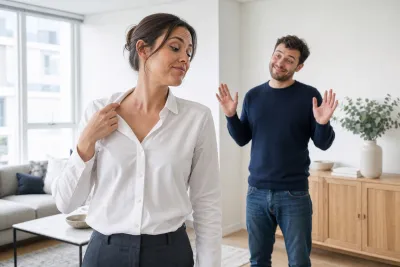
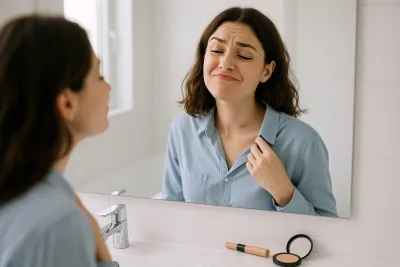
Every bruise in history has been poked by its owner within the hour. A hickey is a bruise. You can see where this is going.
If you're here, you're either about to find out what a hickey feels like, or you're pressing on one right now, running a little pain test. Here's the answer to "do hickeys hurt?" in one breath: done right, a hickey doesn't hurt while it's happening, and it's usually tender for a day or two afterward. That's the normal version.
There's also a not-normal version, and it comes with clear warning signs. Below: what a hickey feels like moment by moment, why some sting and others don't, what the giver feels, how to calm a sore one, and the short list of symptoms that mean it's time to stop searching and call a doctor.
(I'll also ask you to stop poking it. You won't. But I'll ask.)
Do Hickeys Hurt? The Short Answer
A hickey shouldn't hurt while it's being given. It should feel like a strong pull and a building pressure on one small patch of skin, like a kiss that has decided not to move on.
Afterward is a different story, because a hickey is a bruise, and bruises are tender when you press them. Expect the spot to feel sore to the touch, or when a collar rubs it, usually for a day or two. The color hangs around much longer than the ache.
Here's the line between normal and not:
- Normal: pressure and pull during, mild tenderness after, fading over a few days.
- Not normal: sharp pain during, a lump over the mark, a bruise that stays very sore, or a mark that hasn't faded after two weeks.
The first list is a hickey. The second list is information.
How Hickeys Form (and Why That Makes Them Sore)
Just under the surface of your skin runs a mesh of tiny blood vessels. Strong suction tugs on that mesh until some of them break and release tiny spots of blood, which WebMD calls petechiae. Enough of those spots cluster together and you get the red or purple patch everyone at brunch will politely not mention.
That's the whole mechanism. Suction does the work. Biting isn't required, and as you're about to see, biting is usually the reason a hickey hurts.
The soreness afterward is the soreness of any small bruise: a minor injury under the skin that stays tender until your body clears it. Cleveland Clinic's dermatologist describes a hickey as "just slight trauma", which is a fair summary. Slight trauma, slight ache.
The mark usually takes a few minutes to show up after the suction stops, which is why nobody can judge how dark it will be in the moment. I broke the clock down in how long it takes for a hickey to form.
What Getting a Hickey Feels Like, Moment by Moment
Ask ten people what a hickey feels like and you'll hear "intense," "ticklish," "weirdly great," and "like a vacuum cleaner with feelings." Here's the usual arc:
- The first few seconds: an ordinary neck kiss. Warm, maybe ticklish.
- As the suction builds: a tugging, tightening pull, with pressure gathering on one spot. Some people notice a faint prickle near the end.
- Right after: the spot feels hot and flushed, like it has its own pulse.
- The next morning: fine when left alone, sore when pressed, slept on, or scraped by a collar.
- The next few days: the tenderness fades well before the color does.
During: pressure, not pain
The side of the neck is sensitive territory, which is the whole reason a neck kiss lands the way it does. When suction kicks in, the sensation shifts from kiss to pull. Intense? It can be. Painful? It shouldn't be.
Some people find it electric. Some scrunch a shoulder up to their ear and laugh. Some just find it strange. None of those reactions is pain, and all of them are normal.
After: the bruise ache
This is the part people mean when they ask whether hickeys hurt. The honest answer: a bit, mostly when you poke it.
Which brings me to the Poke Rule. Pressing on a hickey to check whether it still hurts doesn't speed anything up. It only reminds the bruise that it's a bruise. It will still be there tomorrow. Leave it alone.
Why Some Hickeys Hurt More Than Others
Two people can get the same hickey and leave very different reviews. Usually one of these explains the gap.
Teeth got involved
A hickey is suction. A love bite with actual biting adds teeth, and teeth pinch, scrape, and can break the skin. If the moment had a sharp edge to it, that edge was almost certainly teeth.
The lips should form a seal that keeps the teeth out of the conversation entirely. That goes double for anyone wearing braces, because brackets don't care how romantic the moment is; kissing with braces covers the workarounds.
Too hard, too long
More force does not make a better hickey. It makes a sorer one. Twenty to thirty seconds of steady suction is enough to leave a mark, which is why the step-by-step method stops there. Past that, you're mostly adding ache.
The spot
The side and back of the neck have some padding. Places where bone sits close under the skin, like the collarbone or the hinge of the jaw, have less cushion, so the same pressure there tends to feel sharper. If someone wants a mark below the neckline, a collarbone kiss is a lovely place for it. Just ease off the suction there.
A beard was involved
Sometimes the soreness isn't the hickey at all. Stubble dragged back and forth across thin neck skin can leave a red, raw, stinging patch around the mark. That's beard burn, not bruising, and the fix lives in how to kiss someone with a beard.
Your own wiring
Pain tolerance varies from person to person, and so does how easily you bruise. Some people mark from a kiss that barely lingered. Others barely mark at all.
Medication plays a part too. Mayo Clinic lists aspirin, ibuprofen, naproxen and blood thinners among the medicines that can make bruising easier. If that's you, expect darker marks and plan accordingly. (And never stop a prescribed medicine for the sake of a hickey. No kiss is worth that.)
A hickey that hurts during is a technique problem. A hickey that hurts after is a bruise. Only one of those can be fixed tonight.
Does Giving a Hickey Hurt?
Not in any way that matters. But nobody warns the giver about the workout.
Holding steady suction for half a minute uses your lips, cheeks and jaw in a way very little else in life does. (A thick milkshake through a thin straw comes close.) Afterward your lips may feel buzzy and a little puffy. They're packed with nerve endings, which is why lips are so sensitive, so they notice everything.
If your jaw actually aches, that's your tell: you were clamping instead of sealing. A good hickey comes from a relaxed mouth. Clenching wears you out, and it usually hurts them more.
How to Give a Hickey That Doesn't Hurt: 7 Rules
If you're on the giving end, these are the rules that keep tomorrow's review positive.
- 1. Ask first. A hickey is a mark someone wears to work, to dinner with their parents, and on video calls. It's their call, every time.
- 2. Agree on a signal. "Easy" or a tap on the shoulder means lighten up immediately. No sulking.
- 3. Start with ordinary kisses. Give the spot some attention before the suction starts, so the pull isn't a surprise.
- 4. Seal, don't bite. Lips in a relaxed O, teeth tucked away.
- 5. Go steady, not strong. Even suction for twenty to thirty seconds beats hard, frantic suction.
- 6. Stay off the front of the neck. The sides of the throat, where you can feel a pulse, are off-limits for heavy suction. The reason is further down.
- 7. Follow the Flinch Rule. A flinch, a sharp inhale, a shoulder pulling away: any of those means ease off and check in. A flinch is information, not a dare.
Do all seven and the only painful part of tomorrow is choosing a shirt.
How to Soothe a Sore Hickey
The care is the same as for any small bruise, with one honest disagreement between the experts.
- Cold, early, if it's swollen: WebMD suggests an ice pack wrapped in a towel for about 15 minutes at a time during the first day or two. Cleveland Clinic's dermatologist is less impressed and says cold does little beyond the first few minutes. Either way, keep ice off bare skin.
- Warmth, later: both agree on warm compresses, which can help the mark fade. WebMD says to switch to warmth after the second day, or right away if there's no swelling.
- Pain relief if you want it: WebMD suggests an over-the-counter pain reliever like acetaminophen. Follow the label, and ask a pharmacist if you take anything else.
- No scraping: coins, forks and toothbrush tricks can do "more harm than good," in Cleveland Clinic's words.
- Loosen the collar: a stiff collar rubbing the spot all day keeps it grumpy.
If you want the mark gone rather than just quiet, that's a separate project: how to get rid of a hickey sorts what helps from the internet folklore.
When a Hickey Hurts Too Much: Signs to See a Doctor
Most hickey pain is boring. A few patterns aren't. WebMD's list of reasons to see a doctor about a hickey:
- The bruise is very sore.
- There's a lump over the bruise.
- The mark hasn't gone away after a couple of weeks.
- You're finding other bruises you can't explain.
WebMD notes these can point to something like a blood or clotting disorder, which is exactly why they deserve a professional look instead of another night of searching. And if teeth broke the skin, keep it clean and watch it the way you'd watch any small cut.
The rare one: why the front of the neck is off-limits
In 2010, the New Zealand Medical Journal published a case report titled "Love bites: an unusual cause of blunt internal carotid artery injury." A 44-year-old woman lost movement in her left arm after a hickey on her neck. Doctors traced it to a clot in the artery under the love bite, which caused a minor stroke. According to news coverage at the time, the clot cleared within a week of treatment.
This is extraordinarily rare. WebMD puts it plainly: it takes "a very unusual set of circumstances" for a hickey to lead to a stroke. But it's the reason heavy suction belongs on the side and back of the neck, never over the pulse at the front.
One rule worth memorizing, hickey or not: sudden weakness or numbness on one side of the body, a drooping face, slurred speech or sudden trouble seeing is an emergency. Call your local emergency number.
Some People Like the Sting (and That's Allowed)
Here's what nobody tells you: for some people, a little ache is part of the appeal. The tender spot the next morning works like a souvenir, a private reminder every time they turn their head.
That's fine, with one condition: the sting has to be chosen, not endured. A firmer hickey is something the receiver asks for, not something the giver decides. If you're curious why people want the mark in the first place, what it means when someone gives you a hickey unpacks the motives, from pride to possessiveness.
Pain someone asked for is a flavor. Pain someone didn't ask for is a problem.
The Bottom Line
Do hickeys hurt? Done right, no. They feel like pressure and pull while they happen, then a bruise-style tenderness for a day or two. Sharp pain during means teeth or too much force. A lump, a bruise that stays very sore, or a mark that won't fade after two weeks means it's time to get checked.
Ask first. Seal, don't bite. Keep it steady. Respect the flinch.
And for the last time: stop poking it.
Frequently Asked Questions
Do hickeys hurt the first time?
Not more than any other time, though surprise can make a new sensation feel bigger. Ask the person giving it to start slowly with lighter suction, and agree on a word that means "ease up."
Is a hickey supposed to hurt?
Not while it's happening. It should feel like strong pressure and a pulling sensation. Mild tenderness for a day or two afterward is normal, because a hickey is a bruise. Sharp pain during usually means teeth or too much force.
How long does a hickey hurt?
Usually a day or two, mostly when the spot is pressed or rubbed. The mark itself can take three days to two weeks to fade, so the color outlasts the soreness. A hickey that stays very sore is worth showing a doctor.
Why does my hickey hurt to touch?
Because it's a bruise. Suction broke tiny blood vessels under the skin, and blood leaked into the surrounding tissue. Pressing on the spot squeezes that tender area. The soreness eases as the bruise heals.
Does giving a hickey hurt?
No, though your lips, cheeks and jaw get a workout. If your jaw aches afterward, you were probably clenching instead of keeping a relaxed seal with your lips.
How do you give a hickey that doesn't hurt?
Ask first, start with ordinary kisses, seal your lips with your teeth tucked away, and use steady rather than hard suction for twenty to thirty seconds on the side or back of the neck. Ease off at the first flinch.
Why is there a lump under my hickey?
Some puffiness right after a hickey can happen, but WebMD lists a lump over the bruise as a reason to see a doctor. Get it checked rather than waiting it out.
Can a hickey be dangerous?
Very rarely. A 2010 case report in the New Zealand Medical Journal linked a hickey to a clot in a neck artery and a minor stroke. Avoid heavy suction on the front sides of the neck, where you can feel a pulse, and treat sudden weakness, numbness or trouble speaking as an emergency.