You didn't feel it happen. That's always the funny part.
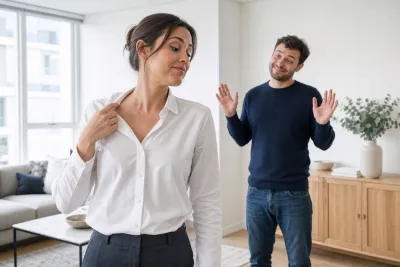
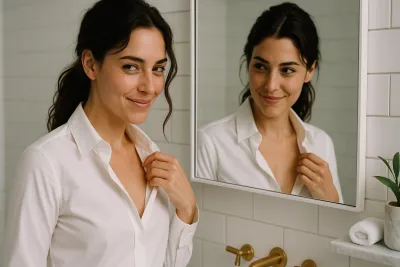
It was a good night, or at least an enthusiastic one. Then this morning the bathroom mirror, a roommate or a coworker with no filter pointed out the purple souvenir on your neck, and now you're replaying the evening trying to work out what they were thinking. And whether they were thinking at all.
A hickey (a love bite, in British English) is a small bruise left when someone kisses and sucks on one spot long enough to break a few tiny blood vessels under the skin. I've covered the what and the how in how to give a hickey.
This post is about the question underneath: what does it mean when someone gives you a hickey, and what does it say about them, about the two of you and about where this is going?
Usually the answer is sweeter than you fear and smaller than you hope. Three things can flip it, though: why they did it, where they put it, and whether you had any say.
What it usually means when someone gives you a hickey
People leave marks for a handful of reasons, and most of them are harmless. Roughly from most common to least, they look like this.
They got carried away
This is the big one. Most hickeys are accidents of enthusiasm. Someone was kissing your neck, you were both enjoying it, and nobody was watching the clock. A little suction in one spot for a little too long is all it takes, and because the mark tends to surface after the moment has passed, it often surprises the person who left it as much as the person wearing it. (The clock behind that delay is stranger than you'd think.)
What it means: they were into you and not paying close attention. That's flattering, and it's about all the mark can tell you.
They wanted to leave something behind
Some hickeys are on purpose. The person wanted a piece of the night to stick around, a small souvenir that follows you into the week. Wanting to be remembered is about as human as impulses get, and a deliberate mark can come from a lovely place or a much less lovely one. That split is the reason most people search this question at all, so it gets its own section below.
You asked for one
Plenty of people like wearing a hickey. It's private evidence, a little jolt of memory every time your collar shifts. If you asked for it, it means what you wanted it to mean: they listened. (If you asked for one on your collarbone and got one under your ear, they listened badly, which is a separate conversation.)
It was a joke or a dare
Hickeys have a long, silly career as a party trick. A round of truth or dare that went one question too far, a friend group egging someone on, a partner who thinks it's hilarious to send you to brunch with a clue on your neck. The joke version is quick, playful and followed by both of you laughing. If only one of you is laughing, it wasn't much of a joke.
It was a message for someone else
Sometimes the audience for a hickey isn't you. It's your ex, the coworker who flirts with you, their friends, your friends, the whole bar. A visible mark says taken to anyone who sees it, and some people leave one mostly for that reason. This version can be sweet or it can be a warning sign, and the difference lives in the details.
Proud or possessive: how to tell which one you got
A deliberate hickey sits somewhere on a line between two feelings. At one end is pride: I'm wild about you and I don't care who knows. At the other end is ownership: you're mine, and everyone else should back off. Both leave exactly the same bruise. They mean very different things.
Psychologists who study how people hold on to a partner draw a similar line. In one study of 178 couples, researchers sorted partner-keeping behavior into generous tactics and costly ones. The generous family includes what they call public signals of possession, like holding a partner's hand when potential rivals are around, and it went with higher relationship satisfaction. The costly family includes guarding, like monopolizing a partner's free time so they can't meet anyone else, and it went with lower satisfaction. Nobody in that study was asked about hickeys, so don't stretch it too far. Still, it's a useful lens: showing someone off feels good, and fencing them in doesn't.
Five tells will show you which end of the line yours came from:
- Timing. A mark after a lovely, private night leans proud. One that appears right after someone flirted with you at a party, or the night before you see your ex, leans possessive.
- Who hears about it. Proud looks like a smug little grin when they catch sight of it. Possessive looks like pointing it out to other people, or making sure one particular person notices.
- How they react to your trouble. If the mark causes you grief at work or with family, a proud partner turns sheepish and helps you hide it. A possessive one seems pleased, or gets annoyed that you'd want to cover it.
- What comes with it. One mark in a warm relationship means very little. A mark that arrives alongside phone checking, sulking when you see friends and questions about who you were talking to is part of a pattern.
- Whether it goes both ways. If they'd happily wear one of yours, it's a game you're both playing. If marks only ever travel in one direction, it's fair to ask why.
The same split runs through the possessive kiss in general. Being chosen out loud feels wonderful. Being claimed in front of an audience, for the audience's benefit, is something else.
What the placement says
Where someone leaves a hickey is often more revealing than the hickey itself. Mouths wander in the moment, so don't over-read a single mark. But a spot that took some effort, or a pattern of spots, tells you plenty. Where someone chooses to kiss you always says something, and a kiss that leaves a mark says it in writing.
High on the neck, above any collar
This is the billboard. No shirt covers it, so anyone who puts a mark there deliberately wants it seen, even if the only viewer they had in mind was you in the mirror. From a partner you've talked it through with, it's a wink. From someone who knows you've got a job interview on Thursday, it's thoughtless at best.
The neck is also where most accidental marks happen, because it's where a kiss turns into wanting fastest. High visibility plus heavy breathing usually just means carried away.
Collarbone, chest or shoulder
The half-hidden zone. A mark here only shows in a low neckline or a tank top. It often means someone wanted the fun without leaving you stuck explaining yourself at work, which is considerate, if a bit sneaky.
Somewhere only the two of you will see
Hip, lower back, inner arm, anywhere clothes always cover. This is the most intimate version, because it has no audience at all. It's a secret between two people, and it suggests they cared more about the moment than about announcing anything. Nobody leaves a mark on your hip to warn off a rival.
What it means when a guy gives you a hickey, or a girl does
Both versions of this question get searched constantly, as though men and women left different kinds of bruises. They don't. The reasons above apply to anyone. What changes the meaning far more than gender is how far into things you are.
When a guy gives you a hickey
From a boyfriend, it's usually enthusiasm with a dash of pride that he gets to be the one. From a guy you've been on three dates with, it means he's very into you physically and less careful than he could be. If he left one and then made sure his friends noticed it, that's about his image, and you're allowed to find it less charming.
When a girl gives you a hickey
Same range, same reasons. The stereotype says women leave marks to stake a claim and warn other women off. Some do, exactly as some men do. More often it's what it usually is from anyone: she was enjoying herself and lost track of what her mouth was doing. From a girlfriend, it can also be a playful dare to see whether you'll wear it with pride. (You'll find out how you feel about that the moment your mother spots it.)
From someone you're not official with
This is the one that ties people in knots. A hickey from a situationship, a hookup or a friend you kissed at a party feels like it should mean something about commitment. It doesn't. A hickey is proof of enthusiasm, not a relationship status. If you want to know where things stand, ask the person. The bruise won't tell you, and it'll be gone before you've worked up the nerve anyway.
If they gave you a hickey without asking
Most people don't ask before leaving a hickey. Usually that's plain carelessness: the mark was an accident, or they assumed it came with the territory. But you're the one who wears it to work, to family dinner and into every photo for the next week or so. That makes it your call, and a decent partner will agree as soon as you say so.
The fix is one short conversation, ideally before it happens again. You don't need a speech.
In the moment, keep it light:
- "Easy, no marks."
- "Kiss, don't suck." (Blunt, but hard to misunderstand.)
- Or guide their mouth somewhere else and carry on.
Afterward, when things are calm:
- "Last night was great. The hickey wasn't, because I spent the day explaining it. Can we keep marks off anywhere that shows?"
- "I'm not into hickeys at all. Everything else you did, please keep doing."
- "If you ever want to leave one, ask first and I'll tell you where."
Then watch how they take it. "Sorry, I got carried away, noted" is the right answer, and most people give it. If they sulk, argue or do it again next time, the hickey was never the real problem.
Anyone who enjoys your neck can enjoy it without leaving evidence. Slow, unhurried kisses do plenty on their own, and how to kiss someone's neck covers the whole range with no bruise required. And if they worry that asking first will kill the mood, it won't. Asking for what you want is one of the most attractive things a person can do.
When a hickey is a yellow or red flag
Most hickeys aren't a problem. A few are part of one. Stay calm and look at the whole pattern.
Yellow flags, worth a conversation:
- They keep leaving marks where you've said you'd rather not have them.
- Hickeys tend to appear after you've been out without them, or right before you see someone they're jealous of.
- They seem more interested in who sees the mark than in you.
Red flags, worth taking seriously:
- You said no, and they did it anyway.
- They get angry when you cover it up.
- The marks come bundled with checking your phone, resenting your friends or treating every conversation you have as a threat.
That last cluster goes well beyond kissing. Checking your phone without permission, extreme jealousy, and possessive or controlling behavior all appear on the warning signs of dating abuse listed by love is respect, which is run by the National Domestic Violence Hotline. If that list sounds uncomfortably familiar, you can reach them any time of day by text, phone or chat to talk it through.
How to respond to a hickey
If you liked it
Tell them. "I keep catching it in the mirror" is an excellent text to send the next morning, and it doubles as a request for more.
Wear it, hide it or split the difference; that's entirely your call. If Monday demands discretion, there's a whole playbook for fading and covering one.
If you want to return the favor, ask first. It's only fair, and the question itself is half the fun: somewhere they'll see it, or somewhere only you'll know about?
If you didn't like it
Say so once, clearly and without drama, with one of the lines above. You don't owe anyone a performance of being fine with it, and you don't need to turn it into a fight either. Most people adjust straight away. The ones who don't have just told you something far more important than any bruise could.
If you're not sure how you feel
That's allowed too. Plenty of people feel two things at once: a small thrill at the reminder and a small grudge about the logistics. You can tell them both halves. "I liked it. I didn't like wearing a turtleneck in September." A partner who can hear that and laugh is a partner worth kissing again.
The bottom line
What does it mean when someone gives you a hickey? Most of the time, that they wanted you and forgot about the clock. Sometimes it's a deliberate little souvenir. Now and then it's a message aimed over your shoulder at somebody else.
Read it the way you'd read any kiss: the reason, the spot and whether you had a say. A hickey you wanted is a private joke you get to carry around for a few days. A hickey you said no to is information about the person who left it, and that information lasts a lot longer than the bruise.
Frequently Asked Questions
What does it mean when a guy gives you a hickey?
Usually that he got carried away and was very into the moment. Sometimes it's deliberate, a bit of pride at being the one who left it. If he points it out to other people, or does it after you've said no, that's about control.
What does it mean when a girl gives you a hickey?
The same range of things it means from anyone: enthusiasm first, occasionally a playful dare or a deliberate souvenir. The idea that women use hickeys mainly to warn off rivals is a stereotype; some do, and so do some men.
Why would someone give you a hickey without asking?
Usually carelessness. They lost track of time or assumed it was part of the fun. What matters is how they respond once you tell them you don't want marks: a good partner apologizes and adjusts straight away.
Is giving someone a hickey possessive?
It can be, but usually it isn't. A mark you both wanted, or one left in the heat of the moment, is affection. It tips into possessive when it's aimed at other people, left after you said no, or part of a wider pattern of jealousy and control.
What does it mean if someone gives you a hickey where no one can see it?
It's the most private version. A mark hidden under clothes has no audience, so it's about the two of you and the moment, and not about announcing anything to the world.
If someone gives you a hickey, does it mean they like you?
It means they were enjoying themselves with you. Whether they want a relationship is a separate question, and a bruise can't answer it, so ask them directly.
How do you tell someone you don't want hickeys?
Keep it short and specific. In the moment, "Easy, no marks" works; afterward, try "I loved last night, but no marks anywhere that shows, okay?" Anyone who cares about you will adjust without an argument.
Should you tell someone you liked their hickey?
Yes. A quick message the next morning is a nice surprise, and it's the easiest way to say you'd welcome another one.